What are the principles of a training program for muscle mass, how should muscle groups be organized, how many exercises and repetitions are necessary? We have already discussed the basic principles of training to build muscle mass, so in this article we will provide a concrete example of how to build muscle mass.
The first phase consists of intensity and mass exercises
First, training for muscle mass means that our number of repetitions will vary between 8 and 15. When performing 8-15 repetitions, we are working in hypertrophic strength mode, when muscle mass and cross-sectional area increase, this is caused by the thickening and increase in the number of individual muscle fibers. During intense physical exertion, both cardiac and skeletal muscle hypertrophy. With physiological hypertrophy of the cardiac muscle, the heart is able to pump more blood at once and the skeletal muscles are able to develop greater strength. Muscle hypertrophy is a specific response of the body to strength loads (hypertrophic strength training).
Secondly, it is important to position your muscle groups correctly to achieve optimal growth and avoid overtraining. Muscle groups can be organized as follows:
- First day: chest
- Second day – return
- The third day: the legs
- Fourth day – shoulders
- Fifth day: hands
- The sixth day is rest
- The seventh day is rest
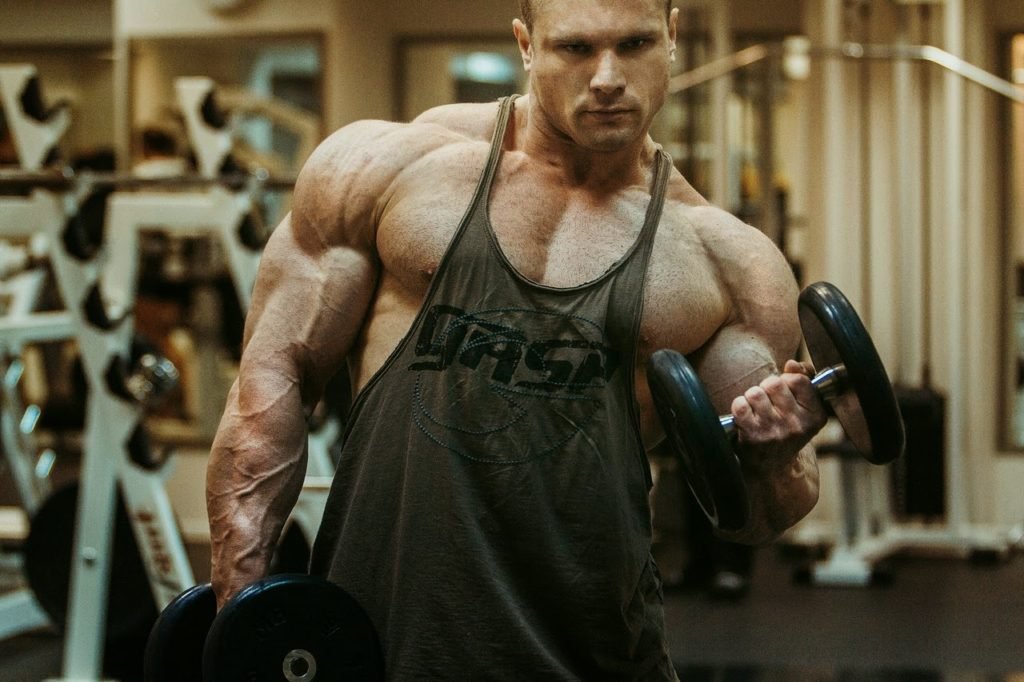
When building muscle mass, recovery after exercise is very important, therefore, according to the example given, we do chest on the first day, during the remaining 6 days the muscle will recover and strengthen. Same with other muscle groups.
To get an idea of how the exercise works, track your progress, and core exercises are great for this. In the program, 5 approaches to basic exercises are assigned, 3-4 approaches to others, 8-12 repetitions are performed:
First day: pectoral exercises
1. Horizontal barbell press 5×8-12 (control exercise)
2. Pectoral exercise 4×8-12
3. Pectoral exercise 4×8-12
4. Pectoral exercise 3×8-12
Second day: back exercises
1. Simple pull-ups with wide grip only 5×8-12 (control exercise)
2. Back exercise 4×8-12
3. Back exercise 4×8-12
4. Back exercise 3×8-12
5. Backbends 5×8-12 (control exercise)
The third day: leg exercises
1. Barbell Squats 5×8-12 (control exercise)
2. Leg exercise 4×8-12
3. Leg exercise 4×8-12
4. Leg exercise 3×8-12
Fourth day: shoulder exercises
1. Barbell Bench Press 5×8-12 (Control Exercise)
2. Shoulder exercise 4×8-12
3. Shoulder exercise 4×8-12
4. Shoulder exercise 3×8-12
Fifth day – hand exercises
1. Biceps exercise 5×8-12 (control exercise)
2. Triceps exercise 5×8-12 (control exercise)
3. Biceps exercise 4×8-12
4. Triceps exercise 4×8-12
The sixth day is rest
The seventh day is rest
The second stage is training efficiency
First of all, when you feel a lack of strength during control exercises, the weights do not increase, the number of repetitions performed decreases, there is no “reserve” of strength for a few more repetitions, the reasons can be various.
You should start with nutrition, dietary supplements, additional physical exertion, rest regime, if everything is in order in these areas, the conclusion is clear – excessive effort during training. It is necessary to reduce the physical load during training by reducing the number of sets and repetitions, modifying the exercises.
Second, when you’re in great physical shape, you want to do one or more more reps than last week with each approach.
With the correct selection of exercises, the number of approaches, repetitions and weights, the strength reserve will increase with each training session, but the increase will decrease proportionally. The results will be felt most in the first 6-10 weeks, depending on the athlete’s physical shape. In the next 6-10 weeks the results will not be so evident and the longer they go on the more they will remain.
We recommend changing program type after a 12-20 week training cycle, preferably to a strength program. After that, return to this program again.
With the help of the program based on the presented principles, you will be able to increase not only muscle mass, but also strength. Good luck!
latest posts published

Protein for athletes: TOP questions and answers

What is cardio?

How to lose weight and lose weight correctly?

benefits and possible harms
Exercises for shoulder muscles
Creatine monohydrate: use, suggestions and observations

Health Benefits of L-Carnitine and Other Benefits
Muscle Strength Training (Mike McErlane)

Weight loss: how to get rid of fat?