
FOR CROSSFIT ATHLETES: COMPLETE, HEALTHY AND BALANCED NUTRITION. how much WHAT? AND WHEN? We are pleased with the interest of our club members not only in training, but also in proper nutrition. This Saturday Mr. Coach Lukas Bitinaitis took the time to explain to the members the main ingredients of foods, their needs, benefits and consumption.
DURING THE SEMINAR WE ALSO PRESENTED THE NEW 5 WEEK CHALLENGE, DURING WHICH:
• We will make 800g. a challenge;
• We will monitor training attendance;
• We will carry out a body analysis test and weigh in before and after the challenge;
• We will follow the progress of the Level Method;
• We will pay great attention to sleep and the quality of rest.
800G. THE CHALLENGE: WHAT IS IT?
When we participate in the Summer Challenge program, we will pay particular attention to a balanced diet. 800 g. refers to the amount of fruit or vegetables consumed per day.
Fruit and vegetables can be processed, fresh and frozen, but dried fruit and juices do not count towards the 800g harvested. amount. For crops 800g. get 4 extra points.
TRAINING ATTENDANCE
We would like to underline that only regular sport brings results, so part of the challenge is to attend training at least 3 times a week.
If you reach a new level during the Level Method test, you get 5 points on your account.
BODY ANALYSIS/WEIGHING
Since Summer Challenge participants have performed a detailed body analysis by weighing and become familiar with their body indicators, they will be awarded additional points after completing the 5-week challenge:
• Decrease in body fat percentage +10 points
• Reduction in visceral fat +10 points
• Increased muscle mass +10 points
• Every other indicator improved +2 points.
Furthermore, 2 points will be awarded for self-weighing and achieving the desired goal.
THERE IS NOTHING MORE IMPORTANT THAN QUALITY SLEEP
If you sleep 9 or more hours during the challenge, you will add 2 points to your account every day.
More than 8 hours – 1 point. For less than 8 hours, unfortunately, you don’t get a single point.
This way we will encourage you to pay attention to the importance of rest and recovery of the body.
DURING THE SEMINAR I ALSO PRESENTED THE IMPORTANCE, BENEFITS AND CONSUMPTION OF NUTRIENTS.
NUTRIENTS: PROTEINS
Proteins perform numerous functions in our body: they regulate normal bodily functions, fight infections, carry out complex chemical reactions and give us strength and resistance.
It is recommended to consume up to 30g of protein at each meal.
NUTRIENTS: CARBOHYDRATES
Carbohydrates are probably the most important source of energy for your muscles.
How much you should eat depends on several things:
• Your body type
• Body fat levels
• Physical activity
• Age
• Protein and fat intake
• Goals
After evaluating these factors, consider whether your body needs fewer carbohydrates or, to gain weight, you will choose a greater amount of carbohydrates during meals.
It is recommended to eat carbohydrates 60-30 minutes before and after exercise. It is at this time that your body will absorb them in the best way. It is best to choose unprocessed complex carbohydrates, rich in fiber. Their variety is also important: fruits, cereals, beans, etc. In case of intense physical exertion or to gain weight, choose fast-digesting carbohydrates with less fiber.
NUTRIENTS: FATS
Fats are divided into several groups:
• Satisfied (butter, coconut oil, red meat, dairy products)
• Mononesites (almonds, avocado, cashews, eggs, olives, peanuts)
• Polynesians (chia seeds, fish oil, hemp seeds, nuts, etc.)
Avoid fats 30-60 minutes before and after exercise. Try to consume most of your fats in the morning and evening. It is not only the variety of fat that is important, but also the quality. For example, use free-range products.
DO NOT UNDERESTIMATE THE IMPORTANCE OF SLEEP
When you sleep less than 7 hours:
• Increases the need for sugar
• Leptin levels decrease
• Increases the likelihood of injury
• Reaction time, motor functions slow down
• Aerobic capacity decreases
Therefore, it is important not only to eat high-quality and varied foods, but also to rest, because it will depend on how you feel during training.
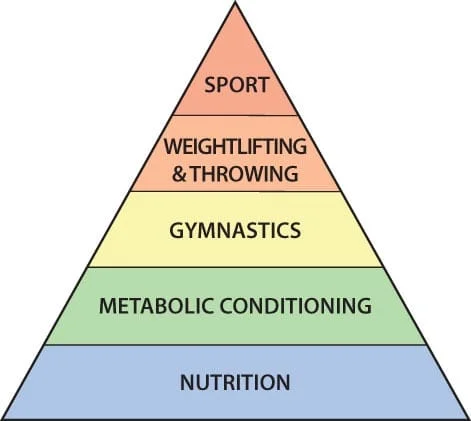
Eat meat and vegetables, nuts and seeds, some fruit, little starch and no sugar. Maintain intake at levels that support exercise but not body fat. – GREG GLASSMAN
Like everywhere, balance is important in life. These 6 components will help you live a healthier life and get the results you want more efficiently. You will learn more about how to combine sport and healthy eating during the Summer Challenge!
latest posts published

The best bodybuilding exercises to sculpt a stronger physique

Jumper: how to find the one best suited to you? (+ useful tips for choosing)

How to start training and not burn out: a healthy approach to movement and progression

How to build a gym at home

Amber CrossFit × CrossFit OPEN 2026

Is CrossFit training dangerous?

What do you need to know when choosing an exercise ball?

Nutrition for athletes, where to start?

Deadlift: benefits, technique and how to perform it correctly