

Compare UK Family Health Insurance Plans: Top Picks

You want clear guidance that saves you time and worry. This short guide shows how to weigh options, spot value and get a fast quote without pressure.
Once, a neighbour rang in a panic after a long NHS wait for tests. A quick switch to a plan with private GP access meant a same‑week appointment and a calm weekend. That relief says why many choose extra cover.
We’ll map plan types, show where cover really helps, and explain how whole‑of‑market brokers and Defaqto‑rated insurers can speed things up. Expect plain English on what most people use and what adds cost with little benefit.
Throughout, you’ll see how to get accurate quotes, keep your existing cover when you switch, and trim premiums while keeping key care and support. Ready to make a confident choice? This guide will help you take the next step.
Table of Contents
- Why you’re here: make sense of family private healthcare in the UK today
- What is family health insurance and how it works
- Plan levels compared: treatment only vs limited diagnosis vs full diagnosis
- What’s usually covered and what isn’t
- family health insurance comparison UK
- Costs in the present: what drives your premium
- Ways to reduce costs without losing essential cover
- Insurers and service quality: how providers compare
- Underwriting types and switching: what to know before you move
- Add-ons that matter for families
- How to compare quotes like a pro
- Next steps: get quotes, compare smartly and secure the right cover
Why you’re here: make sense of family private healthcare in the UK today
You need a clear map to cut through jargon and find quicker routes to care.

Many people look at private options because NHS waiting pressures make fast diagnosis and treatment a priority. Private health insurance often buys quicker appointments, private GP access and choice of hospitals.
PHIN recorded 939,000 private admissions in 2024, up 3% on 2023 showing rising demand for speed and choice. That matters when school, work and daily life depend on prompt medical treatment.
- Faster access to consultants and tests.
- Virtual GP services that speed referrals.
- Private rooms and flexible appointment times to reduce disruption.
| Benefit | Typical outcome | When you’d use it | Note |
|---|---|---|---|
| Private GP access | Quick triage and referrals | Non-urgent symptoms | Often 24/7 virtual options |
| Private diagnostics | Faster scans and results | Suspected conditions needing swift diagnosis | Depends on plan level |
| Private hospital care | Shorter waiting times, private rooms | Planned procedures and elective surgery | Emergency care still through NHS |
| Policy factors | Premiums vary by age and location | When budgeting | Size of cover affects cost |
Over the next sections you’ll learn which plan levels speed diagnosis and what typical exclusions mean for ongoing conditions. This will help you match cover to your priorities and budget.
What is family health insurance and how it works
One policy can cover multiple people, cutting admin and keeping care consistent. In practice, a typical plan allows two adults plus up to five children on a single renewal date.
Who can be covered and typical policy structure
The policy will set levels of cover, from treatment‑only to full diagnostic and outpatient options. This determines how much private care you can use for acute conditions, diagnostics and therapies.
- Up to seven people under one plan simplifies claims and renewals.
- Choose modules to add outpatient tests, therapies or virtual GP services.
- Quotes ask about ages, postcodes, GP registration and time in the country.
Private care alongside the NHS: access and timing
Private care speeds access to consultations and tests, but emergencies remain with 999/A&E. You often start with a GP, then contact your insurer for pre‑authorisation before booking a specialist or tests.

Understanding the policy structure helps you decide which services to buy privately and which to leave to the NHS. That choice affects cost, speed of diagnosis and the pathways available for treatment.
Plan levels compared: treatment only vs limited diagnosis vs full diagnosis
Choosing the right level of cover makes a big practical difference to waits and costs. Below we map the three common tiers and what each means for diagnosis pathways, cancer cover and hospital access.
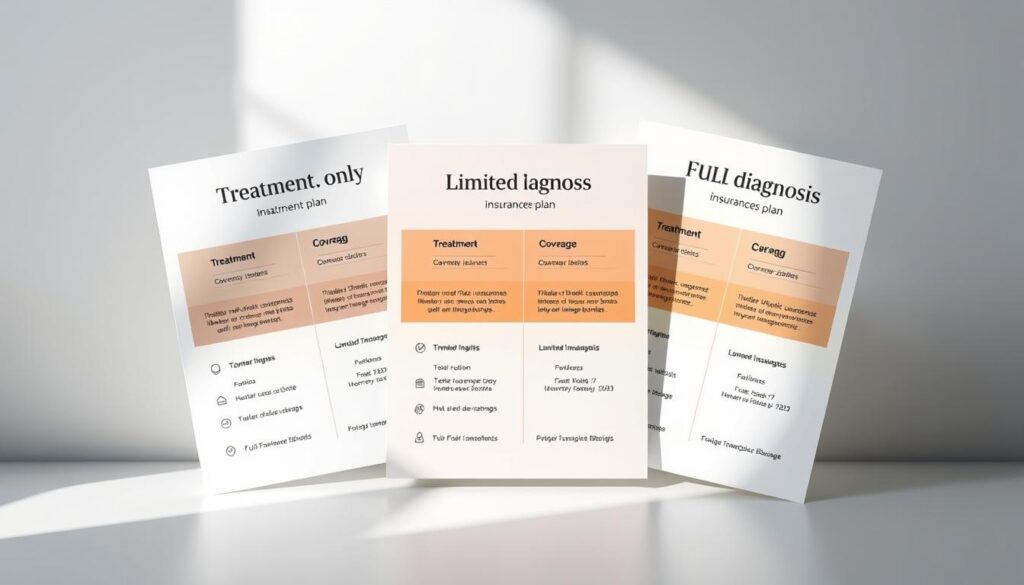
Diagnosis pathways: NHS-led, partial and full private diagnostics
Treatment only relies on NHS-led diagnosis. You usually need a confirmed pathway before private treatment starts.
Limited diagnosis gives private consultations and some scans, but diagnostic tests are capped.
Full diagnosis moves consultations, scans and diagnostic tests into the private system from day one for faster answers.
Cancer cover nuances across tiers
Cancer cover varies by level. Higher tiers can include access to certain drugs or settings not routinely available on the NHS when approved.
"Comprehensive plans often extend to therapies and drug access that matter in complex cancer cases."
Impact on speed of care and hospital access
Full diagnosis shortens waiting for tests and specialist opinions. NHS-led routes depend on local waiting times and capacity.
Hospital lists affect cost and choice: broader lists increase access, while shorter lists cut premiums but limit locations London lists usually cost more.
Which level suits typical family scenarios
- If you mainly want private timing and rooms for surgery, treatment only can control spend.
- If you need quicker initial assessments without full private scanning, choose limited diagnosis.
- If recurring investigations or fast answers matter, full diagnosis saves time and stress.
What’s usually covered and what isn’t
Before you buy, it helps to pin down what typical cover includes and what it excludes. This stops surprises when you need treatment or tests.
Inpatient, outpatient, GPs and diagnostic tests
Core inclusions normally cover private inpatient stays, theatre fees and nursing for planned procedures.
Outpatient consultations and follow‑ups are often included depending on your level of cover. Many plans also provide scans and x‑rays, with limits that vary by policy.
Virtual or private GP access can speed referrals and authorisations, moving you from symptoms to treatment faster.
Common exclusions: emergencies, chronic and pre‑existing conditions
Emergency care remains the responsibility of 999/A&E and is usually excluded from private plans.
Most policies exclude ongoing management of chronic or pre‑existing conditions. Experimental treatments, cosmetic procedures, fertility and routine pregnancy care are typically not covered.
| Area | Typical inclusion | Typical exclusion |
|---|---|---|
| Inpatient care | Planned surgery, theatre fees, private rooms | Emergency A&E admissions |
| Outpatient care | Consultations, follow‑ups (if included) | Long‑term chronic management |
| Diagnostic tests | Scans and x‑rays (capped or full pathways) | Experimental diagnostics or unlimited tests |
| Medication & therapies | Some approved drugs and short therapy courses | Experimental drugs, ongoing rehab for chronic conditions |
Check the policy document and ask your insurer what the definitions, caps and hospital lists mean for your quote and costs. That way you buy cover that matches what you actually need.
family health insurance comparison UK
A true apples‑to‑apples check begins by standardising the details you give each provider. Use the same ages, postcode, excess and outpatient selections so the quotes you get are comparable.
We benchmark plan tiers and benefits across leading firms so you can spot real differences in diagnostic pathways, hospital lists and cancer cover. Look for FCA‑regulated services and whole‑of‑market panels that list multiple trusted insurers.
Key points to check:
- Whether diagnostics are private from day one or follow NHS pathways.
- Outpatient caps, excess options and any co‑payment rules that cut premiums.
- Hospital lists and regional access, including London weighting where relevant.
| Area | What to check | Why it matters |
|---|---|---|
| Diagnostics | Full vs limited | Speeds diagnosis |
| Outpatient limits | Per‑year caps | Cost control vs access |
| Family discounts | Child limits & add‑ons | Can change value |
Prepare the same inputs and shortlist two or three providers. Then request quotes and read the small print on exclusions and cancer drugs so your final choice balances price with claims and customer experience.
Knowing the main drivers behind your monthly premium gives you control over spend. Small choices combine to shape what you pay each month. Understanding the main factors helps you get clearer quotes and pick the right service level.
Age, location and hospital lists (London weighting)
Your age and the number of people named on the plan are major price drivers. Older adults and larger households usually increase the premium. Children add smaller increments.
Where you live matters too. Postcodes in London and major cities push costs up because consultant and hospital fees are higher. Narrower hospital lists often lower the price but limit access to specific hospitals.
Medical and smoking history across members
Your declared medical history and smoking status affect underwriting. Named conditions can lead to higher premiums or specific exclusions. Smokers usually pay more and may face tighter terms from the insurer.
Level of cover, excess and co‑payments
The level of cover is the single biggest lever. Adding full outpatient diagnostics or extras raises the cost more than most other factors.
You can reduce the monthly premium by choosing a higher excess or adding co‑payments. Some providers offer a six‑week NHS wait option to lower premiums if NHS treatment is available quickly.
"Gather consistent ages, postcodes, smoking status and any ongoing conditions before you request quotes."
These simple steps make your quote more accurate and help you balance price with the care and access you need.
Ways to reduce costs without losing essential cover
Small choices can shave hundreds off your renewal without cutting core cover. Start by matching the level of cover to what you actually use. That stops you paying for diagnostics or outpatient limits you won’t use.
Choosing the right tier and trimming outpatient cover
If you are happy to use the NHS for initial diagnosis, a treatment‑only plan keeps private treatment for planned procedures and lowers premiums.
Reduce outpatient limits or remove full diagnostics if you rarely need scans. This can cut costs significantly.
Excesses, co‑pay and six‑week NHS wait options
Raising your excess and adding a small co‑pay reduces monthly premium and shares costs sensibly when you claim.
Opting for a six‑week NHS waiting option is sensible where local waiting times are short — it lowers price but still protects you for longer waits.
Shorter hospital lists and healthy lifestyle discounts
Choosing a narrower hospital list can shrink premiums while keeping quality care nearby. Only add extras you will use.
Ask providers about activity or wellness schemes some insurers reward healthy behaviour with renewal discounts.
| Action | Effect on premium | When to use |
|---|---|---|
| Switch to treatment‑only | Large reduction | You accept NHS diagnosis |
| Trim outpatient/diagnostics | Moderate reduction | Rare outpatient use |
| Increase excess / add co‑pay | Lower monthly cost | Can afford small claim contribution |
| Six‑week NHS option | Small to moderate cut | Local waits are short |
Tip: Review your plan each year and compare the net renewal price. For practical steps on cutting premiums while keeping cover, see how to lower the cost.
Insurers and service quality: how providers compare
Service quality shows when you claim. The real test comes under pressure during referrals, approvals and bill settlement.
Customer and claims experience insights from recent surveys
The April 2025 Which? survey of 641 claimants highlights clear differences in satisfaction and speed of settlement.
Vitality scored lowest for customer experience, with a claims score of 58% versus an average close to 70%.
Aviva sat near the bottom for ease of claiming and settlement speed, though it performed better on some other measures.
Speed of diagnosis and claims settlement differences
Ask how quickly a provider authorises consultations and scans. Network breadth and pre‑authorisation steps affect diagnosis speed.
"Look beyond marketing to claimant stories whether bills are settled directly, if you must pay and reclaim, and how disputes are handled."
- Check claimant surveys when you shortlist insurers.
- Confirm direct settlement practices and helpline hours.
- Ask how exclusions and conditions are explained to avoid friction later.
If service matters most, weigh recent claimant data alongside cover levels and hospital lists. For help choosing the best private option, see best private health insurance.
Underwriting types and switching: what to know before you move
Before you switch, know how different underwriting routes shape what stays covered and what changes. The route your new provider uses can affect access to care and accepted conditions from day one.
Fully underwritten or moratorium?
Fully underwritten policies ask for your full medical history up front. That gives clarity: accepted issues and exclusions are usually clear from day one.
Moratorium policies start quicker with less detail. Some conditions are excluded until you pass a symptom‑free period. That can suit younger, fitter people but may delay cover for recent problems.
Protecting existing cover when you switch
When you move, ask for like‑for‑like continuity to protect prior approvals. Get confirmation in writing that ongoing treatments, hospital lists and outpatient limits will carry over.
If you rely on particular cancer drug access or outpatient allowances, check those match your current level. A cheaper headline premium can hide tighter exclusions or weaker therapy benefits.
| Underwriting type | Speed to start | Clarity on exclusions | Best when |
|---|---|---|---|
| Fully underwritten | Slower (medical checks) | High — clear from day one | You have prior conditions or complex history |
| Moratorium | Fast (minimal info) | Conditional — symptom‑free periods | You need cover fast and have no recent issues |
| Specialist/age or six‑week options | Varies | May limit private pathways | Budget focus or age‑specific needs |
Compare administration too: pre‑authorisation speed, direct settlement with hospitals and adviser support all affect experience. If unsure, involve a specialist adviser and check a sample medical underwriting explained before you accept a new policy.
Add-ons that matter for families
Some optional benefits deliver big value when day-to-day care and quick access matter most.
- Mental health pathways - counselling, psychiatrist appointments and, on higher tiers, inpatient support for teens and adults.
- Virtual GP access - often 24/7 for fast referrals and repeat prescriptions, cutting time off work or school.
- Therapies - physiotherapy, osteopathy and chiropractic care aid recovery after injury or surgery; check session limits and networks.
- Dental and optical modules - annual allowances can help with check-ups, lenses or hygienist visits; weigh use against cost.
Some comprehensive policies bundle these extras. Others sell them as modular options so you only pay for what you need.
Verify pre-authorisation rules and any condition‑specific limits. If you’ve had prior episodes, confirm step‑care rules before you rely on specialist referrals.
For a practical checklist when choosing add-ons, see this guide to family health insurance plans what to look.
How to compare quotes like a pro
Preparing a consistent set of details makes each quote a genuine like‑for‑like test.
Information you’ll need to get started
Gather ages, postcodes, number of people to name on the policy, smoking status and recent medical history. Add how long you’ve been registered with your GP and whether you’re switching an existing plan.
Decide the level of cover you want and whether full diagnostics are necessary or if you can use NHS tests first. Choose an excess you can afford and note any co‑pay preferences — these change the premium a lot.
When to use brokers and whole‑of‑market services
Use FCA‑regulated whole‑of‑market services if you want a single search across many providers. They often list standard and extended hospital options and can include specialist advice from BIBA/AMII‑registered advisers.
If you have complex conditions or need continuity for approvals, a broker can negotiate continuity and explain underwriting terms. Ask them to include direct settlement practices and any introductory discounts.
Cross‑checking provider lists, diagnostics and excess terms
- Match hospital lists: use PHIN to check local hospitals and then confirm each provider’s list.
- Compare outpatient limits: therapy caps and cancer drug access can matter more than headline cost.
- Clarify claims process: confirm whether the provider pays hospitals directly or you must reclaim.
Keep a simple comparison sheet of benefits, exclusions, excess, premiums and underwriting rules. For a practical checklist on how to compare plans, see this short guide: how to compare health insurance plans.
Next steps: get quotes, compare smartly and secure the right cover
Pick two or three plans that fit your priorities, then request matching quotes to see which offers real value.
Sense‑check more than the monthly premium: look at hospital lists, diagnostics, therapy caps and mental health pathways to judge day‑to‑day usefulness.
If you switch, ask new insurers to confirm continuity for any recent conditions in writing before you accept terms. Use an FCA‑regulated broker or whole‑of‑market service when you want extra support with underwriting or complex family health needs.
Check practical steps now: pre‑authorisation, direct billing, claims contacts. Lock in the policy that balances price with the care you will use, then diarise renewal and keep documents and app access handy for quick support.
❤️ Explore More Health Insurance Comparisons
View All Health Articles → Discover Affordable Family Medical Plans USA for You

Find Best Health Insurance for Large Families in Canada

Discover Best Value Family Medical Protection UK Plans

Low Premium Family Health Insurance Plans

Compare Private Health Insurance Plans Australia
Go up
Leave a Reply