
low-cost optical insurance for students Canada: Save on Eye Care

Did you know the average eye exam in Canada costs about $190, yet many provincial plans skip routine adult checks?
You’re here to find simple ways to protect your eyesight while you study. This guide shows how private options can fill gaps left by public plans.
Quick facts: some private policies offer up to $250 every two years for glasses or contacts and about $75 for an exam. Applications can take less than 15 minutes and plans can start at a few dollars a day.
You’ll learn where public coverage stops and how a plan or health insurance can cover exams, frames, and lenses. We’ll also show how to use direct billing at campus clinics and online retailers to lower out‑of‑pocket costs.
Table of Contents
- Your quick start to affordable student vision coverage in Canada
- What optical insurance covers for students
- Low-cost options at a glance: private health insurance vs provincial plans
- low-cost optical insurance for students Canada
- How much you can save: common maximums and benefit cycles
- Real costs today: what eye exams and eyewear typically cost
- Using benefits at checkout: direct billing and manual claims
- Coverage for glasses, contacts and prescription sunglasses
- Eye exam schedules and student health
- Laser eye surgery: whether it’s covered and how much
- If you have access to employer or family plans
- Province-by-province realities students should know
- Student-friendly plan features to look for
- How to compare plans and claim with confidence
- Your next step to clear, low-cost vision care
Your quick start to affordable student vision coverage in Canada
Start your search with a quick check of what provincial health plans already cover. Most government health programs focus on children, seniors, and low-income residents. Routine eye exams and corrective lenses are usually not included for adults aged 19–64.
Private plans bridge that gap. Many options offer exam allowances and a frames or contact benefit that renews every two years. For example, some plans cover up to $250 every two years for glasses or contacts and about $75 for an exam.
Use this simple checklist to pick a plan that matches your needs:
- Confirm provincial limits and any medical-exception rules.
- Choose a plan with an exam allowance plus a frames/lenses allowance on a two-year cycle.
- Check waiting periods and direct billing at your preferred retailers.
- Keep a recent prescription on hand (typically valid for two years).
| Benefit | Typical Amount | Renewal Cycle |
|---|---|---|
| Eye exam | $50–$75 | Every 1–2 years |
| Frames & lenses or contacts | $150–$250 | Every 2 years |
| Direct billing support | Yes/No (varies by retailer) | Immediate or after waiting period |
What optical insurance covers for students
Understanding typical benefits helps you plan purchases and avoid unexpected bills. Many private plans pay a set amount toward routine eye care on a predictable cycle.
Common inclusions are routine exams and an eyewear allowance. Exams often carry a cap of about $50–$75 every two years. Frames and lenses usually come with a $150–$300 maximum every two years.
- You can usually use the eyewear allowance for either glasses or contacts if your prescription is current.
- Some plans let you apply part of the allowance toward laser procedures, but contributions are small compared to typical costs.
- Exclusions are typical: cosmetic procedures and industrial safety eyewear are not covered.
| Service | Typical Amount | Cycle |
|---|---|---|
| Routine eye exam | $50–$75 | Every 1–2 years |
| Frames & lenses / contacts | $150–$300 | Every 2 years |
| Laser eye contribution | Up to ~$250 (modest) | Every 2 years |
Tip: check whether routine services cover both optometrists and ophthalmologists and read your certificate for any pre-existing conditions that affect claims.
Low-cost options at a glance: private health insurance vs provincial plans
Compare what public plans cover versus what private options add so you can plan costs and benefits. Provincial programs typically pay routine exams for children and seniors. Most adults aged 19–64 don’t get routine exam or eyewear coverage unless the visit is deemed medically necessary.
Where provincial coverage stops for most students
For many students, provincial benefits stop at medical exceptions. That means routine exams and glasses are usually not included. If you have low income, some community supports may cover necessary exams but not frames or contacts.
How private health insurance bridges gaps and adds benefits
Private plans often provide set amounts commonly up to $250 every two years for glasses or contacts and about $75 for an exam. They make costs predictable and can include perks like direct billing through major networks.
Typical waiting periods and eligibility notes
Waiting times vary: some policies start vision benefits immediately, while others set waits up to 12 months. Confirm residency, enrolment, and whether you’re on a family or employer plan before you buy. Keep proof of status to speed claims.
low-cost optical insurance for students Canada
Focus on clear, useable benefits: an exam allowance and a set amount toward glasses or contacts. Many options list the exam amount and eyewear maximum up front so you can compare offers fast.
Freedom to Choose highlights typical numbers: up to $250 every two years for new frames or contacts and about $75 every two years for an eye exam. Applications are often quick and completed online.
Workplace plans can add routine coverage, but nearly a quarter of Canadians said they wished they had more vision benefits in a 2024 survey. That makes a small personal plan worth considering if your part-time job doesn’t cover much.
- Prioritize plans with clear exam and eyewear amounts so you can judge real cost savings.
- Choose insurers that offer direct billing or fast claims processing to reduce out‑of‑pocket payments.
- Check online account tools so you can track remaining allowance and renewal dates during term time.
How much you can save: common maximums and benefit cycles
Knowing the usual caps and how often they reset helps you plan tests and new frames smartly.
Typical private plans offer an eyewear allowance of $150–$300 every two years. That amount usually covers frames and lenses when you buy both together.
Exam coverage commonly falls between $50 and $75 on the same two‑year cycle. Many plans pay 100% of eligible expenses up to the stated maximum, so your out‑of‑pocket cost is the difference after benefits apply.
- Waiting periods range from 0 to 12 months check this before you sign up.
- Confirm whether multiple claims in a two‑year period are allowed for contacts and glasses.
- Keep receipts and note renewal dates so you use the full benefit before it resets.
| Benefit | Typical Maximum | Cycle |
|---|---|---|
| Frames & lenses | $150–$300 | Every 2 years |
| Eye exam | $50–$75 | Every 1–2 years |
| Coverage applied | Up to 100% of eligible amount | Until maximum reached |
Real costs today: what eye exams and eyewear typically cost
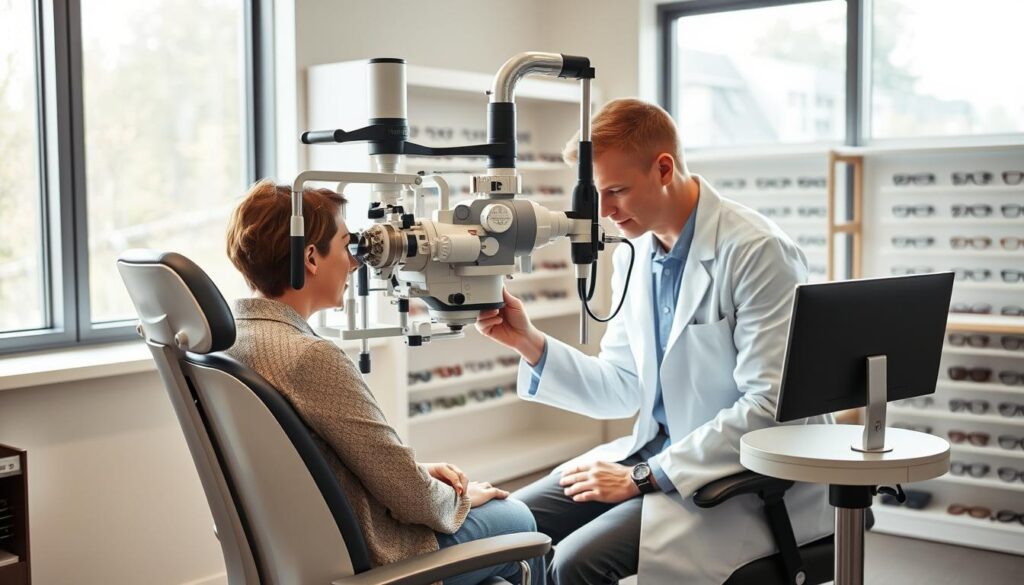
Knowing the real retail prices today helps you plan vision care and avoid surprise bills.
The average eye exam in Canada runs about $190. The Canadian Association of Optometrists recommends adults book an exam every two years.
Most provincial plans do not pay for routine eyewear. Typical private coverage offers about $75 toward exams and up to $250 every two years for glasses or contacts. That amount can shave a big share off a visit and new frames.
Average eye exam cost and how often to book
Plan for roughly $190 per exam in many cities. With a $50–$75 exam benefit you cut the out‑of‑pocket cost substantially.
Budgeting for glasses, contacts and prescription sunglasses
- A basic pair of prescription glasses varies by frame and lens choices; your allowance offsets the base price.
- Contact lens costs depend on brand and replacement schedule; buying larger packs often lowers the per‑unit cost.
- Prescription sunglasses usually count toward the eyewear maximum, so time purchases around renewals.
| Item | Typical retail amount | Benefit cycle |
|---|---|---|
| Routine eye exam | $190 (average) | Every 1–2 year |
| Glasses (frames + lenses) | $150–$400+ | Every 2 year |
| Contact lenses (annual cost) | $120–$400 | Varies by replacement schedule |
| Prescription sunglasses | $150–$350 | Counts toward 2‑year eyewear amount |
Using benefits at checkout: direct billing and manual claims
Checkout is where benefits turn into savings here’s how to make the most of them.
Start by checking your plan details so you know which products and dollar amounts are covered. Choose frames, lenses, contacts, or prescription sunglasses that match your allowance to avoid surprises.
Apply benefits and upload your prescription
Log in at checkout and select the option to apply your vision insurance. You’ll be asked for basic plan information and to upload a valid prescription.
When direct billing is approved, coverage is applied instantly and you pay only the remaining balance.
What to do when direct billing isn’t supported
If your provider isn’t on the retailer list, complete the purchase and keep the receipt. Submit that documentation as a manual claim once your order ships.
Partial coverage is common: your plan pays up to the maximum and you pay the difference.
- Confirm prescription validity before you buy; most services require a current script.
- Dependents must be listed on the plan so direct billing recognizes them.
- Keep receipts and digital copies to speed future claims.
| Process | Speed | Required documents | Payment at checkout |
|---|---|---|---|
| Direct billing | Immediate | Plan details, prescription | Pay remaining balance |
| Manual claim | Days to weeks | Receipt, prescription, claim form | Pay full amount, get reimbursed |
| Partial coverage | Instant or after review | Same as above | Pay difference out‑of‑pocket |
Coverage for glasses, contacts and prescription sunglasses
Know how your eyewear allowance works so you get the right products without surprises. Many plans let you apply the same allowance to either a complete pair of glasses or a supply of contacts. Retailers typically support a wide range of lenses and contact brands, and you can use direct billing or submit a manual claim.
Frames, lenses and add-ons like Transitions and polarized
Your eyewear allowance usually covers frames plus basic lenses. Popular upgrades anti‑reflective, thinner materials, Transitions and blue‑light filters are often included up to your maximum.
- Glasses: choose frames and lenses together to match your prescription and style.
- Prescription sunglasses and polarized options typically count under the same eyewear coverage.
- Compare retailer pricing and confirm whether your chosen add‑ons are supported under direct billing options.
Contact lenses, solutions and replacement cadence
Apply the allowance to dailies, monthlies, toric or multifocal lenses if they match your valid prescription. Plan replacements to match your benefit cycle and consider buying bulk to stretch the value.
Don’t forget solutions and care accessories; some services allow them when bought with prescription contacts. Track claims so you know what remains before your cycle resets and make choices that protect your eye health.
Eye exam schedules and student health
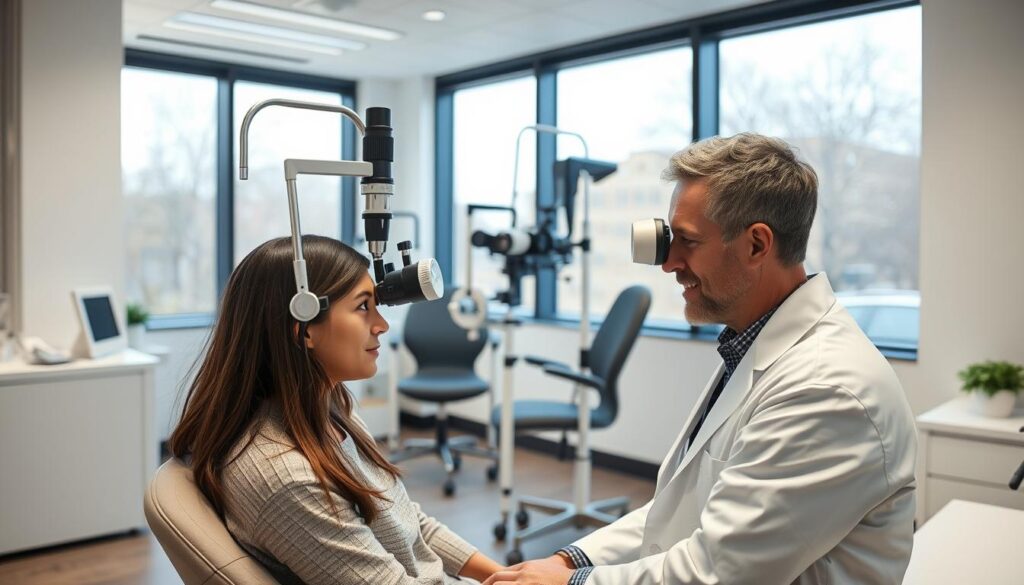
A two‑year exam rhythm helps you match professional guidance with common benefit cycles. The Canadian Association of Optometrists recommends adults get an eye exam every two years. Many private plans set the same two‑year schedule and allow about $50–$75 per cycle for exams.
Routine provincial coverage is often limited to children and seniors unless a visit is medically necessary. That makes it important to track your last test and any upcoming renewal window.
Practical tips to align exams with your plan
- Book your exam every two years to match guidance and most benefit cycles.
- If you wear glasses or contacts, use exams to confirm prescriptions and check eye health early.
- Schedule appointments during quieter academic weeks to avoid rescheduling and losing your allowance.
- Ask for an updated prescription at the visit so you can claim eyewear right away.
- Check whether your plan supports direct billing in the province where you study.
| Recommendation | Typical benefit amount | Renewal cycle |
|---|---|---|
| Routine eye exam | $50–$75 | Every 2 years |
| When to book | At signs of strain or every 2 years | Align with academic breaks |
| Documentation to keep | Receipt and prescription copy | Useful for claims |
Keep a simple record of dates and receipts. For more on using student health benefits, check your student health benefits so you know what your plan covers and what to expect.
Laser eye surgery: whether it’s covered and how much
Laser surgery is an attractive option, yet most plans only chip in a small amount. In Canada, procedures commonly range between $2,000 and $3,000 per eye depending on the clinic and technique.
Some private plans let you apply part of your eyewear benefit toward laser services. Typical contributions are modest often around $250 every two years which covers only a fraction of the total amount.
Average per-eye cost and partial coverage scenarios
Expect a wide price range. Clinics may quote different fees for LASIK, PRK or SMILE, so get an itemized estimate before booking.
- Confirm whether the plan treats laser as part of your eyewear maximum or a separate category with its own cap.
- If your plan offers $250 every two years, consider timing across multiple cycles, but know this still offsets a small share.
- Check eligibility: some conditions or prior treatments affect coverage and may require pre-approval.
- Ask if consultations, post-op exams or medications are eligible under other health services in your plan.
| Item | Typical amount | Claim notes |
|---|---|---|
| Laser surgery (per eye) | $2,000–$3,000 | Depends on procedure and clinic |
| Typical plan contribution | Up to $250 every 2 years | Often partial; verify maximum and category |
| Consultation & post-op | Varies | May be separate; request itemized quote and receipts |
Practical tip: request written pre-approval if required, keep all reports and receipts, and compare clinic financing against the plan allowance so you can manage out-of-pocket costs responsibly.
If you have access to employer or family plans
If you can join a family or workplace plan, your out-of-pocket cost at checkout can drop significantly. Confirm your dependent status and carry policy details when you shop so retailers can bill the correct account.
Being a dependent and coordinating benefits
Ask the retailer to direct bill the primary plan first. If only part of the bill is covered, you will see the insurer’s deduction and the remaining balance to pay.
If you have a secondary plan like a student or employer option submit the leftover amount to it. Coordination of benefits can reduce what you pay.
What happens if your purchase is only partially covered
- Keep records of which plan is primary and which is secondary to avoid delays.
- Ensure your prescription and claim details match across both plans to prevent rejections.
- When direct billing is not available, pay at checkout and file manual claims with receipts.
- If costs exceed the maximum, you pay the difference; that is normal and not a denial.
- Time large purchases around each plan’s renewal or year cycle to make the most of both benefits.
Tip: Keep EOBs and receipts handy. They make future coordination and refunds much easier and faster.
Province-by-province realities students should know

Where you study can change what services get covered, so learn the provincial limits early in the term.
Most provinces cover routine exams for children and seniors, not adults aged 19–64. That means routine eye exams and eyewear are usually your responsibility unless a visit meets medical-necessity conditions.
Limited routine exam coverage and medical-necessity exceptions
British Columbia and Ontario pay for routine exams for youth and seniors, and they allow medically necessary exams for adults.
Manitoba funds one routine exam every two years for under 19 and over 64. Most provinces do not cover glasses or contacts.
Children, seniors and low-income programs contrasted with student needs
Programs for low income may help families and kids. Examples include Saskatchewan Family Health Benefits, Newfoundland Income Support and Yukon children’s supports.
- Expect minimal routine vision coverage as an adult student in most provinces.
- Many provinces cover exams only when medical issues like diabetes or trauma are present.
- Glasses and contact lenses are seldom covered by provincial health plans.
| Province example | Routine exam | Support for low income |
|---|---|---|
| BC | Under 19 & 65+ | Limited programs |
| Ontario | Under 20 & 65+ | Targeted supports |
| Manitoba | One exam every 2 years (young/old) | Limited eyewear help |
Practical tip: keep your provincial health card current, confirm whether ophthalmologist visits are covered, and verify rules if you move provinces for school.
Student-friendly plan features to look for
A student-friendly plan should make benefits simple to use during a busy term. Look for clear rules about how and when you can claim so you can focus on study and life, not paperwork.
Annual vs bi‑annual maximums, no deductibles and quick application
Decide whether an annual or bi‑annual maximum fits your needs. Many plans run on a two‑year cycle that matches exam schedules and a typical eyewear renewal.
Prefer no deductibles so your allowance applies fully to exams and eyewear without an upfront threshold. Some private options advertise quick online applications that take less than 15 minutes.
Extras: paramedical add‑ons and prescription drug integration
If you value whole‑person health, consider bundled plans that add paramedical services. Typical limits might be about $400 per practitioner with a per‑visit cap near $40.
Integrated prescription drug coverage can simplify budgeting when you need regular meds. Also check whether laser eye procedures draw from the vision maximum and how that affects remaining funds for glasses or contacts.
- Look for no-deductible vision benefits so claims apply directly to your maximum.
- Prioritize fast online applications and clear eligibility to start using services quickly.
- Choose plans with benefit trackers or mobile apps that show your remaining maximum in real time.
- Scan the fine print for pre‑existing condition rules or exclusions that could limit vision claims.
- Ensure the provider network includes retailers you trust and supports direct billing at checkout.
How to compare plans and claim with confidence
Before you buy, line up benefit amounts and rules so you know what you can actually claim this year. A short checklist helps you spot the real value and avoid surprises at checkout.
Checklist: coverage amount, exam limits, waiting periods, network
Compare eyewear and exam amounts side by side and note the reset schedule so you know exactly what you can claim each period.
- Check typical benchmarks: $150–$300 for eyewear every two years and $50–$75 for exams every two years.
- Look for waiting periods from none to 12 months; immediate coverage is best if you need care now.
- Confirm direct billing partners in your area and favourite online retailers; manual claims need receipts after the order ships.
- Review whether the plan allows one exam per two years or has other frequency rules.
- Check the maximum for frames and lenses and whether upgrades are included under the same cap.
- Weigh overall value: a slightly higher premium can be worth it if benefits and coverage increase enough.
- Confirm if the insurance plan coordinates with an employer or family plan to cut your out‑of‑pocket costs.
- Verify claim steps for products like contact lenses and prescription sunglasses so submissions are simple.
- Read exclusions and pre‑approval rules to avoid preventable denials.
- Keep a personal checklist with plan name, coverage amounts, exam schedule, waiting period, network, and claim method.
| Feature | Typical amount/limit | Reset cycle |
|---|---|---|
| Eyewear (frames & lenses / contacts) | $150–$300 | Every 2 years |
| Eye exam allowance | $50–$75 | Every 1–2 years |
| Waiting period & billing | 0–12 months; direct billing varies | Applies at enrolment |
Tip: keep receipts and plan details handy. When direct billing isn’t available, manual claims still return funds just submit proof after products ship and your claim will process.
Your next step to clear, low-cost vision care
Get ready to turn your benefit allowance into real savings on exams and eyewear. Plans that include vision can start at just a few dollars a day and may offer up to $250 every two years for glasses or contacts and $75 for exams. That makes basic eye health easier to budget.
List your immediate needs—exam, glasses, contacts—and match them to a plan with clear allowances and short waits. Confirm where you can use benefits, from campus clinics to online retailers that support direct billing or manual claims.
If you have access to a family or employer plan, coordinate benefits with your spouse or primary account to stretch value and cut out‑of‑pocket costs. For an overview of available vision coverage and related health options, see this guide to vision coverage at Canada Life: vision coverage.
Book your exam, save receipts, and set a reminder for the two‑year cycle so you use every dollar of care your plan provides.
❤️ Explore More Health Insurance Comparisons
View All Health Articles → Optical Insurance Comparison UK: Find Your Perfect Policy

Find affordable glasses and eye test cover Australia Today

Get Your individual medical insurance USA online quote Today

Discover Best Individual Health Plans USA for Your Needs

Find the best private medical insurance for singles UK

Find Your Affordable Personal Health Policy UK
Go up
Leave a Reply