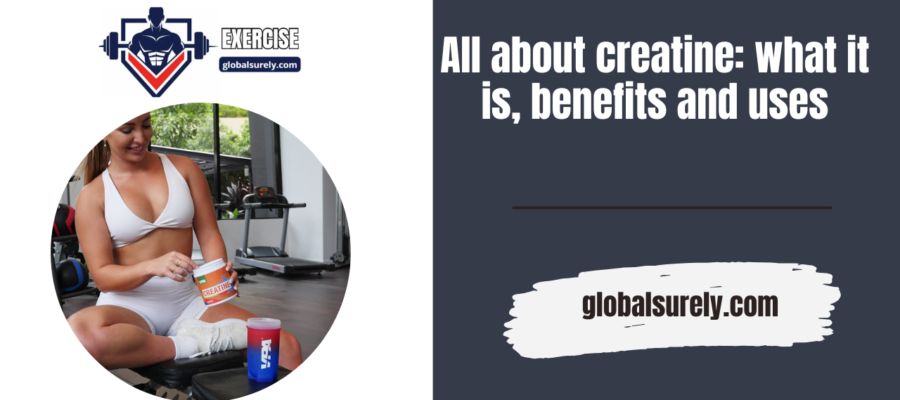
Creatine is a substance found in skeletal muscles that plays an important role in producing energy for the body in the form of adenosine triphosphate (ATP). Creatine is produced in the liver, kidneys, and pancreas, and approximately 95% of the body’s total creatine is stored in skeletal muscle, with the remaining 5% found in the heart, testes, and brain. Our body produces half of the creatine we need in the liver, kidneys and pancreas from three amino acids: glycine, arginine and methionine, the other part comes from the food we eat, mainly fish and red meat. As soon as creatine is produced, it is immediately transported to the muscles through the blood. In muscle cells, creatine combines with phosphate ions and turns into phosphocreatine (PC), an energy-producing compound that regenerates adenosine triphosphate (ATP, an energy-providing compound) extremely rapidly during high-intensity activity. The purpose of creatine supplementation is to increase the stores of phosphocreatine in the muscles, theoretically the greater the amount of phosphocreatine in the muscles, the longer you can sustain high intensity activity.
True/false
- Thanks to creatine you will become slightly faster and stronger for short periods of time – REAL
- Thanks to creatine you will build mountains of muscles in just a few months – melas
- Creatine will increase your aerobic endurance (long distance running) – melas
- Thanks to creatine, your anaerobic endurance (short distance running, sprinting) will increase – REAL
- Thanks to creatine, you can more easily perform one additional repetition of the exercise – REAL
- Thanks to creatine, you can double the load in every training session – melas
Benefits of creatine
- The biggest benefit of creatine is increased strength and more energy during workouts, allowing you to perform a few more repetitions, more creatine in your muscles means more energy.
- Creatine users will almost immediately gain weight, a phenomenon known as “water weight,” which will make muscles appear larger.
- Less reliance on glycogen for energy, which basically means your body will produce less lactic acid, resulting in less muscle soreness, allowing you to train harder.
- Faster muscle growth. With more energy available, you will be able to train harder and see results much faster, some studies have shown that creatine monohydrate increases the growth of lean muscle mass by up to 30%.
- More power during your workouts. Returning to the first point, I would like to add that creatine gives you more energy and as a result you will feel much stronger during your workouts.
- Creatine is a 100% natural product, it is not a drug or steroid. It is found in red meat (beef and pork) and fish (herring, salmon). But it is impractical to try to replenish creatine stores through diet because the amount of creatine in food is small. For example, you would have to eat approximately 5 pounds of raw red meat per day to get the same amount of creatine contained in 1 teaspoon of creatine monohydrate!
- Creatine has also been used to treat serious conditions such as heart disease.
- During activity, for example, when running the bases (baseball), passing the ball (basketball, soccer), or simply rowing a boat, muscles depend on ATP energy. During activity, ATP is broken down into ADP, adenosine diphosphate (Adenosine diphosphate). In other words, when there is less and less energy left and tiredness begins. Phosphocreatine “recharges” tired muscles, providing more energy by helping to convert ADP back to ATP.
- Creatine supplementation increases phosphocreatine reserves, greater phosphocreatine reserves delay muscle fatigue and accelerate muscle recovery.
Adverse side effects of creatine are possible
- Bloating is one of the side effects that some creatine users have reported when taking creatine monohydrate. This is a rare side effect.
- Another side effect of creatine monohydrate is that it can cause dehydration. Of course, this problem is solved very simply, you just need to drink more water. Athletes need to drink more water anyway, so there are very few reports of this side effect.
- There is another very rare case where creatine causes kidney stones. Little is known about how much and how creatine is related to kidney stones. These cases are very rare.
- After stopping the use of creatine, you may feel a lack of energy and a change in appearance, the body may “let go” a little, as you will lose additional “water weight”.
- Nausea and diarrhea may occur, the case is not common, but it does occur, usually because creatine does not dissolve sufficiently in the stomach.
The effectiveness of creatine depends on its correct dosage and use. Improper use or dosage would not give results at best. At worst, improper use or dosage can cause problems such as kidney failure. It is very important to use creatine correctly not only to achieve the desired results, but also to avoid any health problems.
latest posts published

Protein for athletes: TOP questions and answers

What is cardio?

How to lose weight and lose weight correctly?

benefits and possible harms

Exercises for shoulder muscles

Creatine monohydrate: use, suggestions and observations

Health Benefits of L-Carnitine and Other Benefits

Muscle Strength Training (Mike McErlane)

Weight loss: how to get rid of fat?