First of all, back exercises can be divided into two groups: back width and back mass.
Back width exercises are those exercises in which the hands come down and back behind the back. These are the exercises that make your torso V-shaped.
Exercises for back mass include all types of pulls: pulls with the barbell to the chest while bending, pulls with the weight or one end of the barbell towards the chest, exercises with simulators in which the rope is horizontal or inclined.
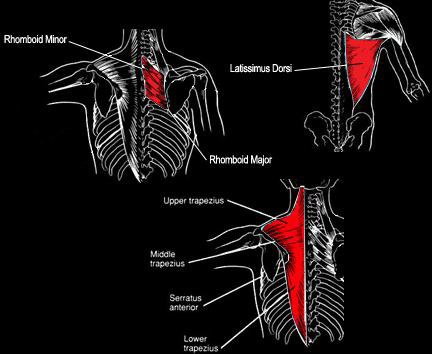
The main and widest muscle of the back (latissimus dorsi) – (also called “lats” and in Lithuanian known as “sparnai”) – the largest muscle in the human body. This muscle is responsible for adduction actions (ex: actions such as rowing).
Trapezius muscle (trapezius): upper fibers (upper fibers) – raises the scapula; central fibers (middle fibers) – attract the spine; lower fibers (lower fibers) – pull down.
The rhomboid major muscle (rhomboideus major) helps stabilize the humerus, helps the latissimus dorsi lift the humerus up and down.
Back exercises
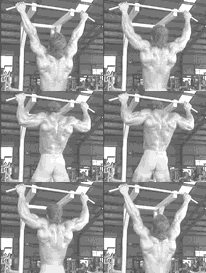 |
Neck pullsThe main load falls on the widest muscles of the back, the large round and rhomboid muscles and the lower part of the trapezius muscle. The biceps muscles of the upper arms and forearms are also loaded. Preparation Performance |
 |
Chest pull-upThe main load falls on the widest muscles of the back, the large round and rhomboid muscles and the lower part of the trapezius muscle. The biceps muscles of the upper arms and forearms are also loaded. Preparation Performance |
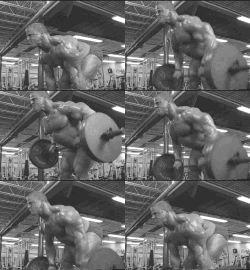 |
Barbell pull bent forwardThe main load falls on the upper back muscles. The trunk extensors, biceps and leg muscles are also worked. This is one of the main exercises for developing upper back muscle mass. Preparation Performance |
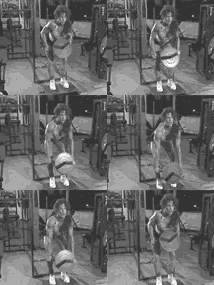 |
T-bar traumaThe main load falls on the upper back muscles. The trunk extensors, biceps and leg muscles are also worked. This is one of the main exercises for developing upper back muscle mass. Preparation Performance |
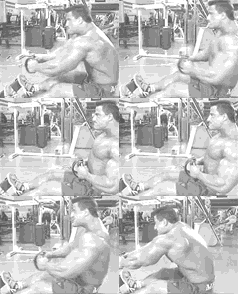 |
Pull the rope on your stomachThe lower back, wider back muscles and large round muscles are the most stressed. The posterior part of the trapezius, the rhomboid and deltoid muscles, the humerus and the radius muscles are also loaded. Preparation Performance |
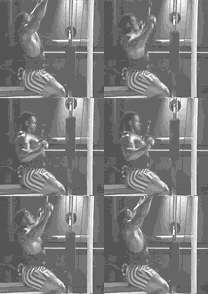 |
Pull the rope to your chestPreparation Performance |
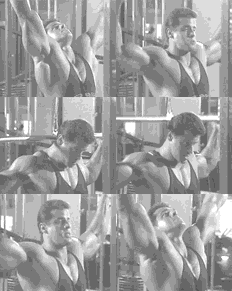 |
The rope pulls on the neckPreparation Performance |
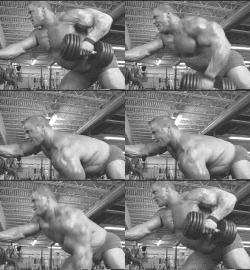 |
Hantelio platePreparation Performance |
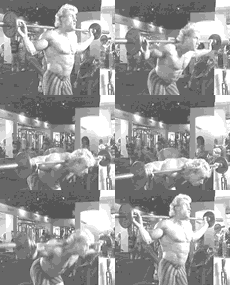 |
Good morningAn exercise that can be performed to help the athlete learn to keep their back straight. This exercise trains the thigh flexors, the large gluteal muscles and also loads the back extensor muscles. Preparation Performance |
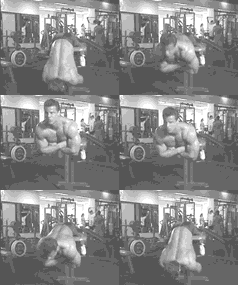 |
Back extension (lower back raises)The main load during this exercise falls on the extensor muscles of the back. The biceps and glutes are also loaded. Preparation Performance |
Trapeze
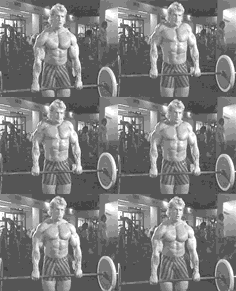  |
Crunches with barbell or dumbbells
|
latest posts published

Protein for athletes: TOP questions and answers
What is cardio?

How to lose weight and lose weight correctly?

benefits and possible harms
Exercises for shoulder muscles

Creatine monohydrate: use, suggestions and observations

Health Benefits of L-Carnitine and Other Benefits
Muscle Strength Training (Mike McErlane)

Weight loss: how to get rid of fat?