Here’s what you need to know to build muscle…
- The only key to success is to train at a high intensity and shorten your workouts.
- Your biceps can wait until you do pull-ups, squats, and deadlifts.
- Don’t ignore aerobic exercises like jumping jacks or sprints to engage the fast-twitch muscle fibers responsible for muscle growth.
- The most common mistake is overloading training programs.
- No matter what muscle building program you choose, you need to eat accordingly to grow.
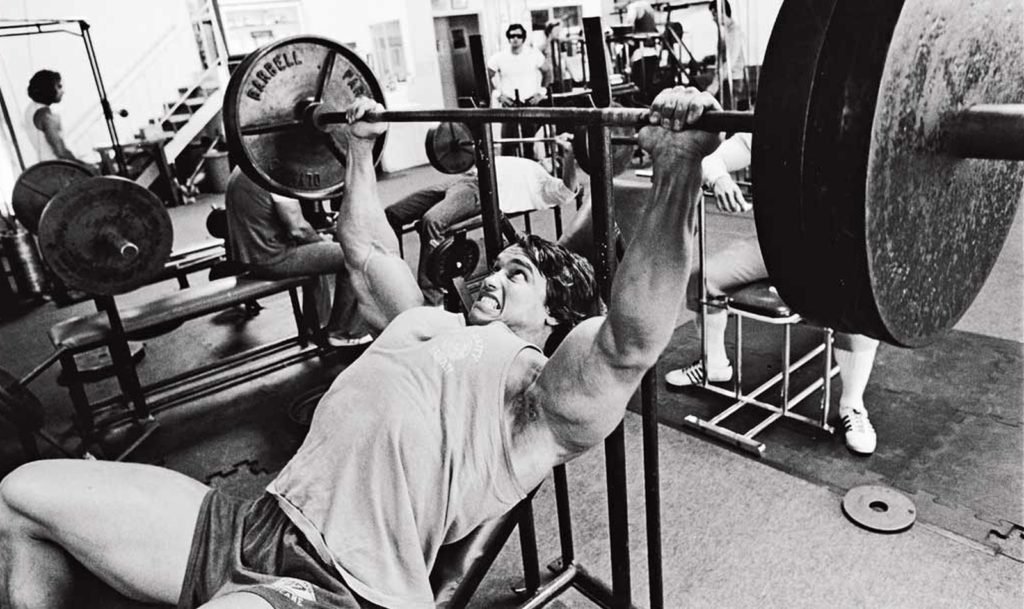
Exercise more frequently
Will you get stronger by doing 52 squats a year or 104 squats? You will respond logically to 104 workouts, but why?
Consecutive exposure stimuli are vital for learning new movement patterns. Your long workouts will be inefficient and won’t do you much good until you get stronger. All you have to do is focus on the frequency of your workouts and give it your all because:
- Increases strength and muscle hypertrophy (growth). In 2000, studies were conducted comparing a group that exercised 1 time per week and a group that exercised 3 times per week (McLester et al 2000). Both groups performed the same amount of training. The 25 expert subjects were assigned to the following groups. One group exercised one day a week, performing 3 sets to failure, on the order of 3-10 repetitions. The second group exercised 3 times a week, performing 1 set each to failure, on the order of 3-10 repetitions. The weights were the same in training both groups. It was concluded that the second group achieved better results in lean muscle mass growth and with 1 repetition maximum. Splitting the training into three parts significantly improved the results.
- This leads to a higher net protein balance. A 2010 study examining anabolic processes in human skeletal muscle found that repeated cycles of net protein balance, repeated when muscles are loaded and supplied with nutrients (protein), lead to muscle hypertrophy (Phillips S., & West, D., 2010). This suggests that frequent training increases protein synthesis at the cellular level, resulting in accelerated muscle growth. It is clear that nutrition is a stimulus for muscle growth, so it is essential to consume the right amount of calories and a sufficient amount of macronutrients.
- More frequent training promotes faster skill development. Like nothing else, lifting increasingly heavier weights requires greater technical skill and experience. Hardgainers are usually weak in exercise. Focusing on more frequent workouts and lifting heavier weights is the key to strength and muscle growth.
- The goal is to keep the goal a goal. Most beginners are known as individuals with illogical and large programs that are quickly cast aside because the results do not come quickly. In addition to the need to constantly encourage and teach persistence, you need to constantly remember what the purpose of the training is. Frequent training reminds you that the goal is to build muscle. Every day is a step towards the ideal.
Possible strategies: Everyone faces obstacles when starting to train optimally. You need to consider the time available for sport, gym equipment, rest time.
You end up training more when you need it the least.
Unfortunately, hardgainers often spend too much time in the gym pumping their pencil-thick biceps for several hours. It is known that the key to training at a higher frequency is to limit training duration by performing intense workouts. Not only will shorter workouts support your recovery, but they’ll leave you more time for what you really need to do: eat.
Conclusion: To successfully train at higher frequencies, you need to abandon high-volume training. This leads to more frequent and higher quality workouts.
Ignore isolation exercises
I also love pumping muscles, but being a skinny guy and starting to dig deeper I realized that isolation is a waste of time. You won’t benefit from isolation until you have enough strength. Forget the machine and hang 20kg off your torso for pull-ups instead. This will have a much greater impact on growth. Seriously, skinny guys don’t need insulation. Focusing on isolated exercises increases overall training volume and potentially interferes with your ability to train at high intensity. However, if you can’t live without pumping your biceps, delts or calves, dedicate a maximum of 10 minutes to them at the end of your workout, once or twice a week. This will help you enjoy your workout more.
Conclusion: preference for core exercises and free weights, minimal attention to isolation exercises.
Efficiency first of all
Sculpting your body is something you are capable of doing despite life’s constant obstacles. You need to increase the capabilities of your muscles, joints, ligaments, nervous system. At least once a week, you should add jumping jacks and high-intensity push-ups after your dynamic warm-up to increase muscle capacity. This will recruit fast-twitch muscle fibers responsible for efficiency, strength growth and muscle growth. Box jumps are a great option. Throwing a medicine ball on the ground (medicine ball slam) or doing explosive push-ups are good exercises for the upper body and a strong core.
Sprinting is another great option for improving performance because it stimulates a massive increase in anabolic hormones. Like weightlifting, sprinting requires high muscle contraction, thus triggering the release of growth hormone and testosterone, as well as an increase in nervous system strength. Sprinting also improves anaerobic capacity and performance. Contrary to what you might think, sprinting will not negatively affect your chances of recovery. Your working weights may suffer a little at first, but in the long run you will increase the efficiency of your training, your endurance and ultimately you will not suffocate when climbing stairs.
Conclusion: forget the fact that building mass requires as little movement as possible. Move well at least once a week for 3 sets of 5 repetitions to keep your nervous system at a safe level. Sprint for 4-5 sets of 10-20 meters each, or run uphill for 10-15 minutes in 4-8 second micro-sprints once or twice a week.
Progressive overload
It’s sad when you train for a year, but the results are the same as before starting sports and you still do 3 sets of 10 repetitions with 60 kg. To make progress, you need to stress yourself out by doing more than you can, with more weight at a higher frequency, or with a higher training volume. Choose your program, keep the lifts the same, but increase the weights. It doesn’t matter if it’s 5×5 or 5/3/1, the principle is the same: stress the body. As a result, the body will develop stronger muscles.
An example of a training program for muscle mass
Weeks 1-3
2 heating sets
Work sets: 3 x 8, increasing the weights so that the eighth repetition of the main exercises is hellish.
Weeks 4-6
1 x Heating Set
Work sets: 4 x 7, increasing the weights so that the seventh repetition of the main exercises is hellish.
Weeks 7-9
1 x Heating Set
Work sets: 5 x 5, increasing the weights so that the fifth repetition of the main exercises is hellish.
Weeks 10-12
Work sets: 8 x 3 (the first sets are warm-ups), increasing the weights so that the 3rd repetition in the main exercises is hellish.
Training exercises are chosen individually. Most importantly, whatever program you choose, increase the weights on the bar. Progress guarantees progress, good luck!
latest posts published

Protein for athletes: TOP questions and answers

What is cardio?

How to lose weight and lose weight correctly?

benefits and possible harms

Exercises for shoulder muscles

Creatine monohydrate: use, suggestions and observations

Health Benefits of L-Carnitine and Other Benefits

Muscle Strength Training (Mike McErlane)

Weight loss: how to get rid of fat?