Judo’s equipment list is shorter than that of many other sports, as only a judo kimono is usually required. However, it is very important to choose the right judoga.
In this article we will describe in detail how to choose judogi for an athlete, what important nuances an experienced judo athlete should know and how to properly care for your judo kimono.
What is a judo kimono and where does it come from?
Many novice judokas and their parents have the habit of calling judoka a kimono. But this is completely wrong.
Although originally derived from the judo kimono, it has a special name: JUDOGI. Judogi is the Japanese name for traditional uniforms used in judo training and competitions. A little more about mobile history.
The founder of judo, Jigoro Kano, circa 20th century. was originally created by judo judogi, based on the traditional Japanese kimono and other Japanese clothing. He was the first modern judo judogi.
Over time, judogi has undergone several changes in cut and material. The sleeves and pants of the judogi have become longer, the traditional unbleached cotton is now the bleached white and blue judogi. However, the uniforms are still very close to those used 100 years ago.
What does judogi consist of and how to choose?
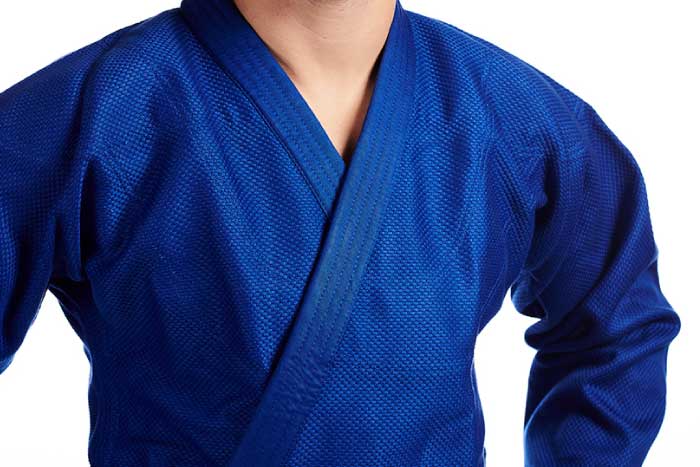
The judogi consists of three parts: a hard jacket (uwagi), trousers (shitabaki or zubon) and a cotton belt (obi).
Traditionally, judogi is made of cotton. Depending on the purpose (training, competition), the density of judo material can vary greatly.
The top of the jacket, collar and sleeves are made of denser material, because these areas have to withstand heavy loads (strong grips).
Usually the knees of the trousers are also reinforced to make them last longer. Every moving part, even the back of the jacket collar, has a name.
Typical purchasing mistakes:
You buy a karate kimono.
Since it is a martial art, some people do not pay attention to the density of the threads.
Judogi differs from karategi in density and pattern. Judogi is much denser than karategi. The Judoka karategi looks like a good and light sheet!
You get an absolutely perfect judogi (that shrank in the wash)
It should be remembered that judo can shrink up to 3 cm during the first wash. So it would be nice if the sleeves were about 3cm at the beginning. above the wrist.
First of all, flexibility must go hand in hand with growth. Clothing should not be too short or too long, because in these cases it is uncomfortable to practice the martial art of judo.
You should also decide how dense you want your mobility to be. Many companies offer softies of different densities, even for children. Judogi with a density of 180 to 350 grams are suitable for children who have just started judo.
For older children and enthusiasts, those with a density of 400 grams are suitable. Judogis with a density of 650-750 grams (approved models) are suitable for professionals who participate in competitions.
For flexible density, it would be best to get a recommendation from your trainer. The coach knows which model is best for the student.
Why might judo belts be different?
Judoko belts can be of different colors, as the color of the belt indicates the level of the judoka. The first belt of all judokas is white.
The belt, included in the judo set, is tied twice around the waist and has a nice knot on the front. It takes time to learn a nice, smooth knot.
Why do judokas wear different colored judogi during competitions?
Every advanced judoka must have both a white and a blue judogi competing.
Judokas wear different judogi during a fight so that judges and spectators can better distinguish between a judoka during a fight.
What is an IJF approved judogi?
IJF-approved judogis are judogis of specific size, material density and other characteristics, worn by professional athletes in competition and are governed by the rules of the International Judo Federation (IJF).
These rules also determine the length and width of the sleeves of the jacket and trousers. IJF-approved judogi is marked with red embroidery and must be worn on the jacket, trousers and belt.
IJF judges are certified and if judo inspectors find non-compliance, they can disqualify a judoka from competition.
All judogi used during competition must be clean, without visible damage. Men traditionally wear judogi on their naked bodies, while women are allowed to wear a white t-shirt.
What is comfortable to wear while training?
Both white and blue judoga are allowed in judo training.
White is a traditional color that is often preferred because it is a better color for both judo and Japanese cultural traditions.
There is probably no judoka in Japan who wears a blue judogi in the gym. The Japanese only use blue in international competitions.
How to take care of soft tissues?
Judo judogi may shrink up to 3cm in the first wash, this is more likely to happen when washing at high temperatures. It is important to respect the temperature requirements indicated on the judogi or on the packaging!
Judogi must be washed separately from other items. We do not recommend placing the colored judogi belt in the washing machine, as it may color the judogi. Such an experience can happen to even the most professional judoka.
The Judogi should be groomed at least once a week. Then it would be great if judogi could be ironed out. This ensures a fantastic and well-groomed appearanc
As a rule, children tolerate mobile devices very well, and it is necessary to buy a new one only when the child has outgrown the old one. Even adult judogi last a long time. It depends on how often you train, how many training camps and competitions there are.
What other equipment would a judoka need?
Judokas should have a water bottle, sports bag or backpack, patches, towel, judogi shirt and belt. Also knee and elbow pads if needed.
Easy acquisition of judo
As you begin your Judo Judo purchase, check out the Judo Judo selection on Budopunkt in the online shop. In our online shop you can consult professional consultants who will help you purchase the most suitable model.
If the article was useful to you, click “Like” and if your friend might be interested, click “Share”.
Your feedback is very important to us because it shows that it is worth creating high-quality content in the Lithuanian language.
latest posts published

Protein for athletes: TOP questions and answers

What is cardio?

How to lose weight and lose weight correctly?

benefits and possible harms
Exercises for shoulder muscles

Creatine monohydrate: use, suggestions and observations

Health Benefits of L-Carnitine and Other Benefits

Muscle Strength Training (Mike McErlane)

Weight loss: how to get rid of fat?