

Smart Home Insurance Discounts USA: Exclusive Offers

One rainy night you wake to the sound of dripping. A small leak turns into a soaking mess without a quick alert. You install a few easy devices, get the warning, and stop a claim before it starts.
This guide shows how those simple gadgets can lead to real savings on your home insurance. Insurers reward tech that cuts water, fire, or theft risk. That means you may qualify for up to 20% off with the right setup.
You'll learn which gear matters most leak detectors, smart smoke monitors, and security sensors—and how carriers like State Farm, Allstate, Amica, Farmers, Chubb, Nationwide, USAA, and Hippo handle credits and free systems.
Before you buy, check eligibility and whether the insurer asks for app activation or data sharing. For a deeper look at how technology ties to price cuts, see this overview on the topic: connection between tech and savings.
Table of Contents
- Your buyer’s guide to smart-home savings on homeowners insurance
- Smart home insurance discounts USA: what they are and how they work
- Smart home devices that can lower your premiums and reduce claims
- Which insurance companies in the United States offer discounts right now
- How to qualify, keep your discount, and protect your data
- Budgeting your smart home: upfront costs, subscription fees, and payback timeline
- Ready to save more on homeowners insurance with smart home tech
Your buyer’s guide to smart-home savings on homeowners insurance
Start by picking devices that stop the biggest risks: leaks, fires, and break-ins. Focus on those first and you’ll target the gear insurers value most. That path gives the best chance at lower premiums and real savings.
Set a simple budget. Many leak sensors cost under $50. Smoke detectors range from under $50 to nearly $200. Thermostats often run $100–$300. Smart plugs commonly sell in multi-packs for under $50.
Plan upgrades in phases. Buy leak sensors and a monitored smoke alarm before investing in full alarm packages. Professional monitoring can increase the size of your rate cut, but remember subscription fees when you calculate payback.
Confirm eligibility with your company before you buy. Ask what brands qualify, whether apps must stay active, and what proof you need for your policy. For a clear overview, see this smart-home insurance discount guide.
- Prioritize leak, smoke, and camera gear.
- Check monitoring options and required paperwork.
- Choose devices that play well with your existing home security setup.
Smart home insurance discounts USA: what they are and how they work
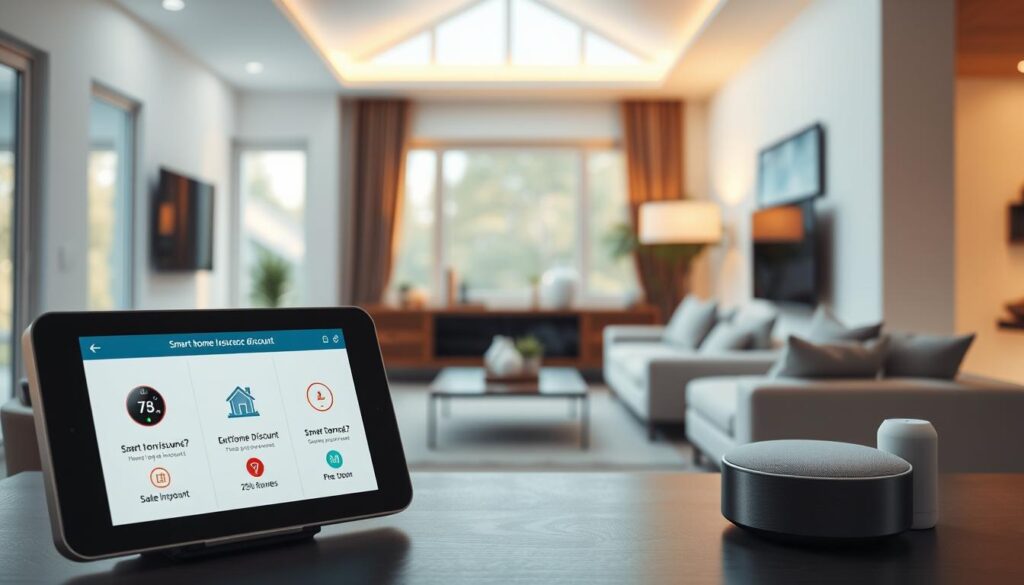
Early alerts from connected detectors can turn a big claim into a minor fix. Insurers reward devices that lower the chance of major loss because fewer claims mean lower payouts.
How this helps you: a water sensor can ping your phone the moment a leak starts. Some systems then trigger an automatic shutoff to limit damage. Smoke and electrical detectors spot hazards before flames spread. Motion sensors and cameras deter theft and record events.
Many programs favor professional monitoring. That service gives insurers quicker, verified responses, and often leads to larger reductions on your policy. Some carriers provide hardware or partner deals—State Farm’s Ting and ADT tie-ins and USAA’s Roost/Resideo offers are real examples.
Check activation rules: companies may ask that apps remain active or that you share usage data. Learn what your insurer requires, then install devices that match those terms.
| Risk Category | Typical Device | Why insurers value it |
|---|---|---|
| Water damage | Leak detectors / shutoff | Early alert prevents flooding and large claims |
| Fire | Smoke / electrical sensors (Ting) | Detects hazards before they become catastrophic |
| Theft | Cameras & door sensors | Deters loss and documents incidents for faster claims |
| Combined systems | Monitored security packages | Professional monitoring often yields the biggest rate reductions |
For a practical overview of device-driven savings and policy details, see this guide to device savings.
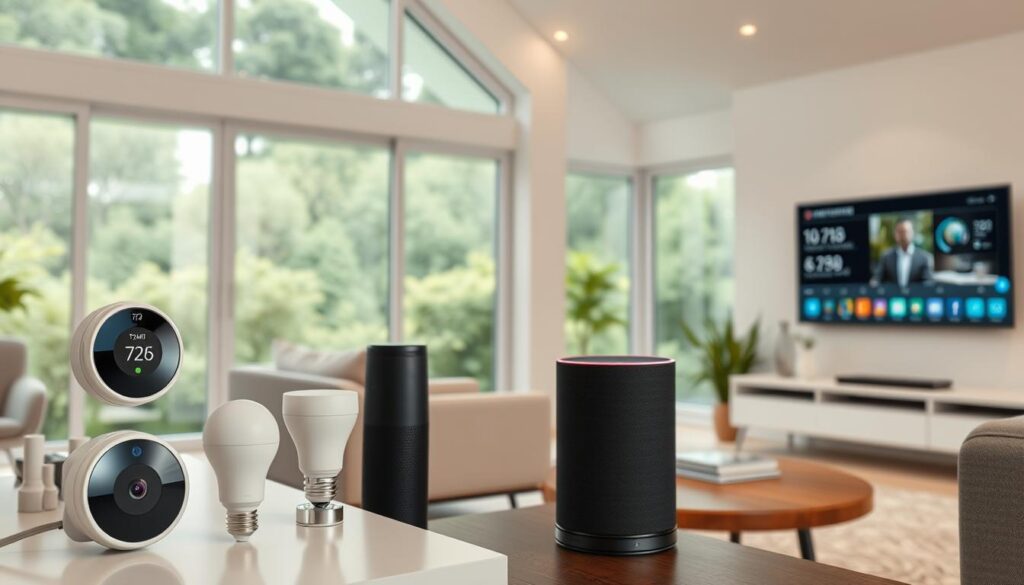
Practical gear can cut losses and shrink the chance of a claim. Focus on devices that stop water, fire, and burglary first. Start small and add layers as you go.
Water leak detectors and automatic shutoff systems
Water leak detectors often cost under $50 and alert you 24/7 to moisture. Pair them with an automatic shutoff like Flo by Moen to stop a drip before it becomes major damage.
Security systems: cameras, door/window sensors, and monitoring
Cameras deter burglars, track packages, and let you speak to visitors. Combine door and window sensors with professional monitoring to get faster responses and better policy credits.
Smoke and electrical fire prevention
Smart smoke detectors can notify your phone while you’re away and range from under $50 to about $200. State Farm’s Ting monitors electrical faults that can lead to fires. Add temperature sensors to flag overheating early.
Supporting devices that manage risk
Thermostats ($100–$300) help avoid frozen pipes by keeping temperatures steady. Smart plugs let you cut power to risky appliances remotely.
- Prioritize water protection first, then perimeter security, then fire prevention.
- Stage purchases to fit your budget and list device compatibility before you buy.
- Keep apps active and save install proof to maintain ongoing credits.
| Risk | Device | Why it matters |
|---|---|---|
| Water | Leak detectors + shutoff | Stops flooding and costly repairs |
| Security | Cameras & door/window sensors | Deters theft and documents incidents |
| Fire | Smoke detectors, electrical monitors | Alerts you and prevents electrical fires |
| Temperature | Thermostats & temperature sensors | Prevents frozen pipes and overheating |
For a deeper look at how these systems translate to savings, see this smart home devices that could lower.
Which insurance companies in the United States offer discounts right now

A growing number of companies credit policyholders who add monitored sensors and shutoffs that prevent claims.
Major carriers and typical savings:
Allstate, Amica, Chubb, Cincinnati, Farmers
Allstate can give up to 5% for approved cameras, leak detectors, and entry sensors. Amica rewards security, temperature monitors, leak detectors, and electrical fault alarms, often with partner promos.
Chubb targets high-value homes with credits for leak detectors, generators, and even reimbursements—up to $5,000 for water protection after a covered claim.
Cincinnati offers roughly 2%–8% for automatic shutoffs and centrally monitored alarms. Farmers lists 5%–20% for devices that reduce water, fire, or theft risk, with larger credits for professional monitoring.
Programs and partnerships
Nationwide provides free monitoring systems in some states. State Farm supplies Ting for three years in many areas and may pair with ADT in others. Travelers and USAA have specific Connected Home programs that require app activation or multiple devices. Hippo often includes a complimentary system and reports average annual savings.
"Ask your insurer what proof they need, whether apps must stay active, and how monitoring affects your rate."
| Company | Typical Savings | Notable Offer |
|---|---|---|
| Allstate | Up to 5% | Approved cameras, leak detectors, Canary perks |
| Amica | Variable; higher for monitored devices | Partner promos (Moen, Guardian, Kangaroo) |
| Chubb | Varies; reimbursements available | $5,000 water protection reimbursement |
| Cincinnati | 2%–8% | Device discounts via partners |
| Farmers | 5%–20% | Higher credits for professional monitoring |
How amounts vary: Discounts depend on device type, level of monitoring, and your location. Contact your insurer to confirm eligibility and required documentation before you buy.
How to qualify, keep your discount, and protect your data
To keep a lasting rate cut, you need documented installs and active device connections. Carriers commonly require proof that approved models are installed, that systems stay online, and that any professional monitoring remains active.
Eligibility steps: approved models, proof, and monitoring
Check your insurer’s approved list and confirm whether a self-install counts or if a pro must do the work. Save receipts, install confirmations, and any monitoring enrollment paperwork so your policy update goes smoothly.
Data-sharing and app activation
Some companies require app activation or limited sharing of device status to keep a discount in force. For example, State Farm’s ADT program and USAA’s Connected Home ask for usage data or connected leak detectors to qualify.
"Keep app access and device connectivity active; insurers validate protection that way."
- Keep a digital folder of receipts, screenshots, and monitoring confirmations.
- Set reminders to renew subscriptions and update firmware so your credits don't lapse.
- Review privacy settings and opt in only to the data your policy needs.
| Requirement | Why it matters | Action |
|---|---|---|
| Approved models | Insurers verify compatibility | Check list before buying |
| Proof of install | Speeds up policy changes | Save receipts/screenshots |
| Active monitoring | Often unlocks larger credits | Maintain subscription and connectivity |
Budgeting your smart home: upfront costs, subscription fees, and payback timeline
Budgeting starts by comparing upfront costs with the likely savings over a few years. Run simple math on what you spend today versus lower premiums and fewer repair bills tomorrow.
Prioritize by risk
Put water protection first if your house has older plumbing or past leaks. Choose water leak detectors and consider a shutoff valve to cut damage fast.
In higher-theft areas, a professionally monitored security setup usually gives better savings and larger premium cuts. Use thermostats to manage temperature swings and prevent frozen pipe damage.
Stacking savings
Look for carrier promos and partner offers. Amica and Cincinnati may give partner discounts on devices, while Hippo sometimes includes complimentary monitoring with a policy.
- Run payback timelines: compare device costs and expected premium reductions.
- Factor subscription fees for monitoring and cloud storage into total costs.
- Phase purchases: start with leak detectors and smoke alerts, then add security.
| Device | Typical costs | Primary payback driver |
|---|---|---|
| Water leak detectors / shutoff | Under $50 each; shutoff varies | Prevents flooding and large repair bills |
| Smoke detectors | $50–$200 | Reduces fire damage and claim severity |
| Thermostat | $100–$300 | Prevents frozen pipes; energy savings |
| Monitored security | Device cost + subscription | Larger premium reductions through monitoring |
Ready to save more on homeowners insurance with smart home tech
Choosing the right devices now can cut claim risk and trim your premiums fast. Start with leak detectors, monitored smoke alerts, and a right-sized security system to get immediate protection and savings.
Many companies offer credits or free systems: Farmers (5%–20%), Allstate (up to 5%), Chubb, Cincinnati, Nationwide, and Hippo all have programs that reduce your costs when systems stay active.
Contact your insurer to confirm eligibility, installation proof, and whether app activation or data sharing is needed. Schedule installs, enable monitoring for larger credits, and keep receipts handy.
For a practical guide on how devices protect your property and help lower premiums, see how smart tech can protect your.
🏠 Explore More Home Insurance Guides
View All Home Articles → Smart Device Protection Cover Australia
Find Best Smart Home Security Insurance UK for You

Connected Home Insurance Policy Canada
Get comprehensive homeowners coverage USA for Your Home

Find the Best Home Insurance for Homeowners USA

Get Quotes for Mortgage-Linked Home Insurance UK
Go up
Leave a Reply