

Discover IoT Home Insurance Savings USA for Your Smart Home

You walk into your kitchen and a tiny sensor has already shut the water off after a leak. That quick action stopped a small mess from becoming a big claim. You breathe easier knowing one small device helped avoid a major repair.
This guide shows how connected tech can do more than add convenience. You’ll learn which smart home devices qualify for real discounts and how carriers reward risk reduction. Many insurers offer programs that include free gear or monitoring to cut losses and lower premiums.
Read practical steps for documenting devices, checking eligibility, and estimating payback. For examples of carrier programs and partnerships, see this short industry overview at insurance device applications.
Table of Contents
- Why smart home IoT matters for your homeowners insurance right now
- How insurers turn IoT into savings: discounts, underwriting, and real-world impact
- The Buyer’s Guide to smart devices that can lower your premium
- IoT home insurance savings USA: what major insurers are offering today
- What it costs versus what you save: installation, monitoring, and ROI
- Eligibility, privacy, and tech fit: read the fine print before you buy
- Take action today: your step‑by‑step path to smart home insurance discounts
Why smart home IoT matters for your homeowners insurance right now
Small, networked devices can spot a problem early and stop a costly loss before it starts. That shift moves the idea of a smart home from convenience to active protection.
What this means for you:
- You can get alerts from sensors that detect moisture or temperature changes before water damage grows into a large claim.
- Doorbell cameras and motion sensors boost security by giving instant video and remote checks when you’re away.
- Smoke and heat detectors deliver faster warnings for fire, helping you act sooner and limit loss.
Insurers now see how connected technology reduces frequency and size of claims. When devices intervene quickly, carriers may reward you with better underwriting or discounts.
Deploying reliable devices creates a stronger risk profile for your property. Over time, this foundation can lead to more favorable terms as companies tie pricing to proven loss prevention.
How insurers turn IoT into savings: discounts, underwriting, and real-world impact
One timely alert from a smart sensor can save you a major repair bill and a long claim fight. Insurers now link real-world loss prevention to lower rates when devices prove they cut risk.
What typically triggers a discount:
- Devices that stop a loss like a water leak sensor with automatic shutoff, smart smoke detectors, or monitored security often unlock a homeowner discount.
- Professional monitoring raises underwriting confidence, so some companies offer larger discounts for third‑party monitoring.
When data sharing increases your savings
You may be asked to share usage data to validate eligibility. State Farm, USAA, and Farmers tie program rules to shared device reports, and some carriers advertise up to 20% homeowners discounts.
AM Best: smart leak detectors and shutoff devices can reduce non‑weather water losses by up to 93%.
Document installations, provide model and monitoring details, and compare how each insurer structures discounts so you get the best rate for your setup.
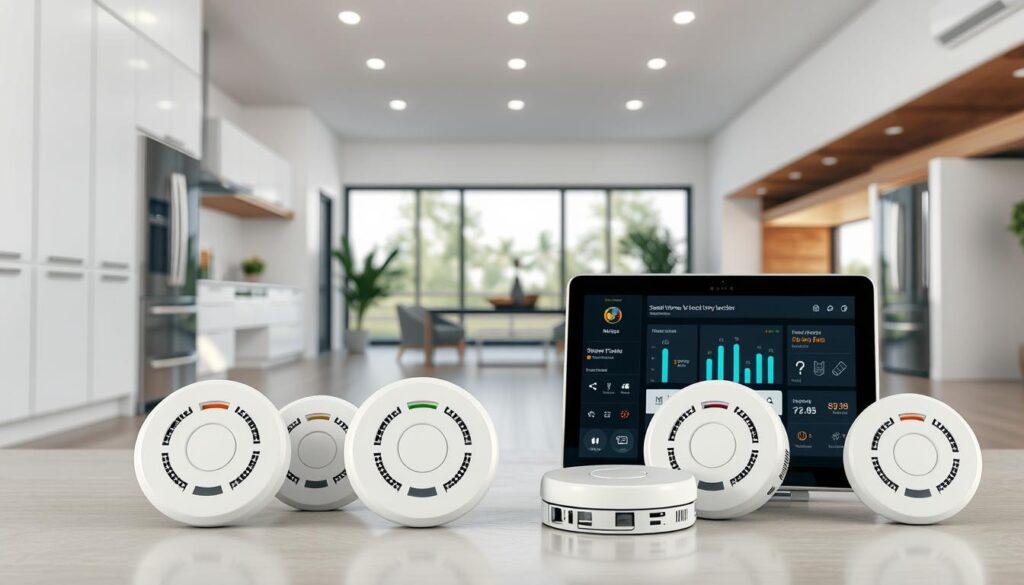
The right sensor can detect slow leaks long before you see water stains. Start by choosing devices that stop losses, not just report them.
Prioritize water leak detectors and automatic shutoffs. Water damage is among the costliest claims. AM Best finds smart leak detectors and shutoff systems can cut non‑weather water losses by up to 93%. Brands like Moen Flo combine detection with automatic shutoff to limit damage fast.
Smart smoke and carbon monoxide alarms
Choose alarms that send remote alerts and self‑test automatically. Products such as Google Nest Protect notify you when you’re away and reduce fire risk with clearer warnings.
Security systems, cameras, and video doorbells
A full security system with cameras, motion sensors, and a video doorbell deters theft and captures evidence. Examples include EZVIZ DB1 doorbells and August smart locks. Professional monitoring can increase the value of your setup.
Smart thermostats and environmental sensors
Thermostats and humidity or freeze sensors help you avoid pipe bursts and mold. Use sensors to flag temperature swings and high humidity before damage occurs.
Compatibility matters. Look for Matter support so your smart home devices work across Alexa, Google, Apple, and Samsung platforms without complex hubs.
- Place leak detectors near water heaters, appliances, and under sinks.
- Install smoke alarms in bedrooms and hallways.
- Mount cameras at main entry points and coverage areas.
| Device Type | Main Benefit | Typical Placement |
|---|---|---|
| Water leak detectors & shutoff | Prevents major water loss; qualifies for discounts | Water heater, laundry area, under sinks |
| Smoke & CO alarms | Faster alerts; reduces fire risk | Bedrooms, hallways, near kitchens |
| Security system & cameras | Deters theft; provides video evidence | Front/rear doors, ground‑floor windows |
| Thermostats & environmental sensors | Prevents freeze, mold, and HVAC issues | Basement, attic, main living areas |
For a quick primer on qualifying for an insurance discount and typical program rules, see this discount overview.
IoT home insurance savings USA: what major insurers are offering today
Many national carriers reward verified protective gear with policy credits and perks. Below is a quick tour of what leading companies are offering and how your device mix and location can change the result.
Allstate
Allstate policyholders can earn up to 5% off with approved cameras, leak detectors, and entry sensors. Some states also get a $20 discount on Canary service plans for eligible accounts.
Amica
Amica favors broad coverage. Discounts apply for security, temperature monitoring, leak detectors, fire alarms, and electrical fault monitors.
The company often supports partner codes (Moen, Guardian, Kangaroo) and rewards third‑party monitored systems.
Chubb
Chubb offers incentives for water and gas leak detection, automatic gas shutoff, generator installation, and temperature monitoring.
It may reimburse up to $5,000 for installing leak control systems and up to $2,500 for a generator after a covered water damage claim.
Farmers
Farmers uses tiered discounts from 5%–20%, with the largest credits for professionally monitored protective devices. Documentation of monitoring boosts eligibility.
Nationwide, State Farm, Travelers, and USAA
Nationwide provides free smart monitoring in some states and discounts for theft, fire, and water prevention gear.
State Farm offers three years of free Ting electrical fire monitoring and partners with ADT for free gear or discounted monitoring when you share usage data. Travelers and USAA also run device programs or require at least two leak detectors and shared app data for a discount.
How location and device type change your discount
Your state rules, the exact devices you install, and whether you use professional monitoring all shape the discount. You’ll generally get the best result when your setup targets water, fire, and theft and when you can prove installation or active monitoring.
| Company | Typical Discount | Notable Devices/Perks |
|---|---|---|
| Allstate | Up to 5% | Connected cameras, leak detectors, door/window sensors, $20 Canary offer |
| Amica | Varies by program | Security, temp monitors, leak detectors, electrical fault monitors, partner codes |
| Chubb | Program-based incentives | Water/gas leak detection, auto gas shutoff, generator reimbursements |
| Farmers | 5%–20% | Professionally monitored devices, tiered discounts |
| Nationwide / State Farm / USAA | Varies; free hardware/monitoring in some states | Free monitoring offers, Ting electrical monitoring, leak detector discounts |
What it costs versus what you save: installation, monitoring, and ROI
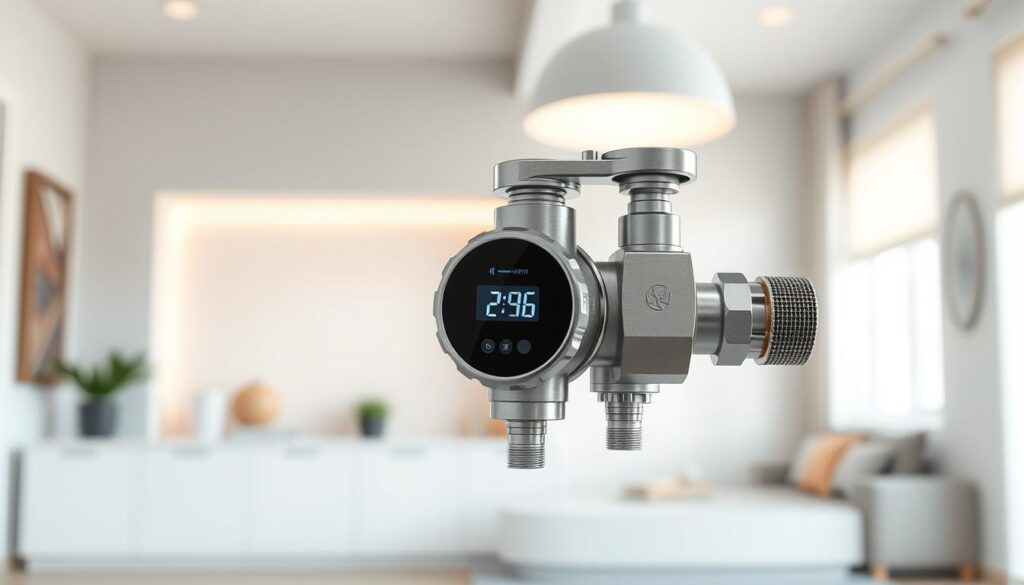
Start by adding up what you’ll spend on sensors, valves, and monitoring, then compare that to likely claim avoidance.
Hardware and setup: Expect basic leak sensors to cost little, while a premium smart water shutoff valve and professional installation can run up to $800 Flo is often cited in this range. For older plumbing or prior leaks, higher upfront cost may be worth it.
Monitoring and subscription fees
Monthly monitoring for security or monitored leak response adds recurring cost. Look for insurer partnerships that cut subscription fees State Farm’s Ting offer or ADT discounts can offset ongoing charges.
Projecting payback over time
Use your insurer’s discount (Farmers lists 5%–20% in many programs) and claim‑reduction stats to estimate ROI. AM Best and Flo studies show dramatic drops in claim events and severity for leak shutoffs.
- Compare one‑time hardware and installation against annual premiums and likely avoided water damage claims.
- Include maintenance: batteries, firmware updates, and periodic testing to keep devices eligible for credits.
- Stage upgrades: start with sensors in high‑risk spots, add a whole‑home shutoff, then monitored security for layered protection.
For a practical checklist on whether your setup will pay off, see this primer on cost and benefits can smart homes save you money.
Eligibility, privacy, and tech fit: read the fine print before you buy
Before you buy devices or sign up for a program, read what your company requires. Rules vary: some firms accept functioning gear, while others want third‑party monitoring or proof of installation to unlock a discount.
Many companies ask for photos, invoices, and serial numbers as proof. A few require professional monitoring contracts or certified installers to qualify a policy for a discount.
Some programs need ongoing data sharing. State Farm’s ADT partnership and USAA’s Connected Home both request usage data from leak and security apps to verify eligibility.
"You’ll be judged by the data your devices report keep logs and permissions clear to preserve your discount."
Compatibility tips and tech fit
Choose Matter‑capable devices to reduce platform lock‑in and ease integration with Alexa, Google Home, Apple Home, or Samsung SmartThings. Test Wi‑Fi reach and add backup power so critical systems keep working during outages.
| What to Verify | Why it Matters | Action Steps |
|---|---|---|
| Monitoring requirement | Determines if professional service is mandatory | Ask your agent; get contract details in writing |
| Proof of installation | Used in audits to confirm devices are active | Save photos, invoices, serials with your policy |
| Data sharing rules | Impacts privacy and ongoing eligibility | Decide comfort level; compare companies and policies |
| Platform compatibility | Simplifies device management and reduces failures | Prefer Matter support; test before purchase |
Quick checklist: confirm eligibility rules up front, gather proof, set clear data‑sharing limits, and compare insurers for the best privacy fit. For a broader look at technology and policy trends, see this AAA industry overview on smart technology and insurance discounts: smart home technology and insurance.
Take action today: your step‑by‑step path to smart home insurance discounts
Start with targeted fixes sensors where water sits and alarms where people sleep to get protection fast.
Install smart water leak detectors like Moen Flo, a video doorbell such as EZVIZ DB1, August smart locks, and Nest Protect alarms to earn early eligibility for discounts and reduce risk immediately.
Document each install: model numbers, dates, and monitoring contracts. Call your company or agent with that list to confirm eligibility, required proof, and any data‑sharing rules.
Choose a professionally monitored security system if you want larger credits, and consider a whole‑home shutoff for older plumbing to cut major water damage risk and long‑term cost.
Test devices regularly, consolidate platforms (prefer Matter‑ready gear), and notify your insurer after each upgrade so your paperwork matches your protection.
🏠 Explore More Home Insurance Guides
View All Home Articles → Home Automation Insurance UK: Compare & Save

Smart Home Insurance Discounts USA: Exclusive Offers

Smart Device Protection Cover Australia
Find Best Smart Home Security Insurance UK for You

Connected Home Insurance Policy Canada
Get comprehensive homeowners coverage USA for Your Home
Go up
Leave a Reply