General Liability Insurance Small Business USA: Protect Your Business
You were finishing a client install when a visitor slipped near your storefront. One quick call and the day that felt like progress turned into a worry about costs, claims, and time lost.
That moment is why you need a clear plan for third-party claims and day-to-day accidents. Having the right policy can cover medical payments, legal defense, and property damage to others, so a single event won’t derail your growth.
You can often get a quote online in minutes and show proof of coverage fast to win jobs and satisfy permits. For more details and quick quotes, check this helpful resource: business liability coverage options.
This guide will walk you through what coverage commonly includes, how limits and deductibles affect cost, and how to pick options that fit your company and reduce everyday risks.
Table of Contents
- Why your small business needs general liability insurance right now
- What is general liability insurance?
- General liability insurance small business USA
- What general liability insurance covers during normal operations
- What general liability doesn’t cover
- How much does general liability cost?
- Related coverages many small businesses bundle
- Who benefits most from general liability coverage
- Getting covered: from quote to certificate of insurance
- Claims made simple when something goes wrong
- State-by-state considerations and important notices
- Protect your business today with the right liability coverage
Why your small business needs general liability insurance right now
A routine site visit can turn costly if a guest trips, an ad sparks a complaint, or a tool damages a client’s floor.
Everyday operations carry clear risks. Third-party bodily injury and property damage claims can arrive without warning and lead to expensive defense costs or settlements.
Real-world risks: slips, property damage, and advertising claims
Visitors slip on a wet entryway. A technician accidentally scratches hardwood. An online post triggers a claim of improper image use. These incidents fall under general liability and can generate claims that interrupt work and cash flow.
Client trust, contracts, and licensing requirements
You win more contracts when you can instantly share proof of coverage. Many clients and permitting authorities require a certificate before work begins.
- Protect cash flow: defense and settlements can be handled by your insurer up to your policy limits.
- Meet contract terms: some contracts and licenses demand active coverage before access or payment.
- Build trust: having coverage reassures clients and keeps projects moving.
What is general liability insurance?
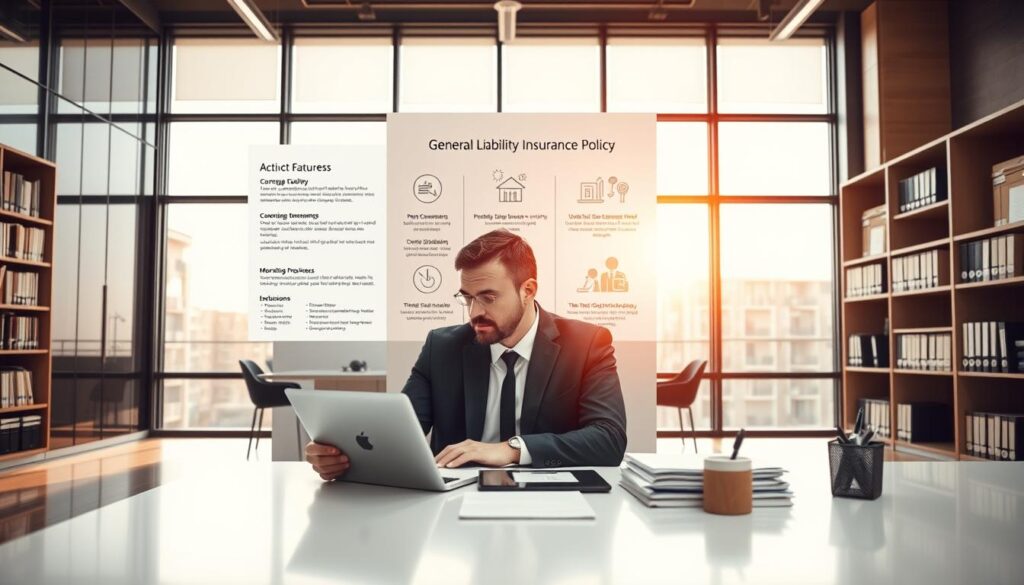
One misstep by a visitor or a marketing miscue can turn into a costly third-party claim. You need a clear view of what core protections do for you so you can decide what limits and add-ons fit your operations.
Core protections cover bodily injuries, property damage, and medical payments. If a guest trips at your location or your crew damages a client’s desk, the policy helps pay medical costs and repair bills for items you don’t own.
"Legal fees and defense costs are often handled by the insurer, up to your policy limits."
Personal and advertising injuries guard against claims like libel, slander, or copyright misuse in marketing. Your carrier typically manages investigations and hires defense counsel, and settlements or court costs are paid according to your policy terms.
Review what’s included and excluded, choose limits that match contract needs, and consider related options when you need broader protection. For more on comparing plans and quick quotes, see business liability options.
General liability insurance small business USA
Permit offices and project managers often won’t let work begin without valid proof of coverage. You can buy a policy online in about ten minutes and usually get an instant certificate to share with clients and permit clerks.
Tailored coverage for contractors and trades lets you pick limits that meet local rules and client demands. Entry-level pricing may start near $19/month for low-risk operations, but your final premium depends on your trade, location, and claims history.
What to expect and why it matters
- Quick online quotes and immediate proof of insurance streamline approvals.
- Endorsements add additional insured status when clients request it.
- Policy terms vary by state; confirm availability and required endorsements for licenses.
"Having the right policy and instant proof can keep your project on schedule and protect your reputation."
| Feature | Benefit | When to use |
|---|---|---|
| Instant certificate | Speeds permit and contract approvals | Before job start |
| Additional insured endorsement | Meets client contract terms | When requested by project owner |
| Personal & advertising injury | Protects marketing and reputation | When you run ads or post images |
For a fast quote and details from a major provider, see this general liability page.
What general liability insurance covers during normal operations
When a visitor is hurt or a client’s belongings get damaged, you want fast help and clear limits. This section explains the usual protections that step in during day-to-day work.
Bodily injury and third-party medical expenses
You’re covered if a guest is injured at your site. Medical payments help pay bills for small injuries so disputes over fault don’t slow things down.
Property damage to items you don’t own
If your crew accidentally breaks a client’s fixture or scratches a desk, this part of the policy helps pay repair or replacement costs for others’ property.
Personal and advertising injury, including libel
Claims tied to marketing from libel to copyright misunderstandings are included. That protection helps when a post or ad triggers a third-party claim.
Legal defense and claim investigation costs
Insurers usually fund defense and investigations and hire lawyers to manage claims. Settlements and judgments are handled up to your policy limits, which reduces out-of-pocket stress.
- You can raise limits if you host many visitors or work on client sites often.
- Damage to your own tools or property is excluded and needs separate coverage.
- Keep your certificate ready to explain your insurance coverage to clients and permit offices.
For further coverage details and examples, see coverage details.
What general liability doesn’t cover
Not every loss falls under your policy some gaps can leave you paying out of pocket. Read what is commonly excluded so you can close holes with the right add-ons and separate plans.
Your own property and theft
You won’t get reimbursed for stolen or damaged items you own. Theft, tool loss, and damage to your equipment usually fall to commercial property coverage, not this policy.
Employee injuries and workers’ compensation
Claims from staff who are hurt on the job are handled by workers compensation. That plan pays medical bills and lost wages for your workers.
Errors, omissions, and professional risks
If a client claims faulty advice or a missed deadline, you need professional liability or errors and omissions coverage. Those types protect service-related claims.
Vehicles used for work
Accidents involving business vehicles are covered by commercial auto, not personal policies. Confirm vehicle limits and who is an authorized driver.
"Read your policy exclusions carefully they define what’s outside the scope."
- Bundle property, auto, and professional plans to reduce gaps.
- Talk to an agent to match limits and endorsements to your contracts.
- Document each coverage's role so your team knows which policy to use.
How much does general liability cost?
Pricing for protection can vary widely, so knowing the main drivers helps you plan ahead.
Key pricing factors: industry, location, employees, and limits
Your premium reflects the risk of the trade you perform, the state or city where you work, and how many people you employ.
Higher-risk trades and urban areas usually pay more. Payroll, annual revenue, and any prior claims also affect rates.
Choosing policy limits and deductibles to fit your budget
Select limits that meet client requirements without overspending. Common structures like $1M/$2M balance protection and price.
You can lower cost by choosing a higher deductible, applying safety controls, and keeping claims rare.
- Marketing examples may show "as little as $19/month" for low-risk profiles, but your actual premium depends on your full profile.
- Review options each renewal as your team or projects change.
- Consider bundling related plans to access package pricing from some carriers.
"Align limits with contract needs so one claim won't threaten your cash flow."
For tailored options and details on professional medical exposures, see medical professional liability UK.
Smart owners often combine core protections into one plan to cover property, driving, and service risks. This approach reduces paperwork and makes it easier to show proof to clients.
Business Owner’s Policy
A BOP merges general liability and commercial property so your space, contents, and income interruptions have coordinated protection. It’s a cost-efficient way to get broad business insurance without buying separate products.
Professional risks and vehicle cover
- Professional liability protects you from claims tied to errors or poor advice. Add it when your services or designs carry financial risk for clients.
- Commercial auto covers business driving exposures that personal policies often exclude. Use it if you or employees drive for work.
Cyber and workers’ protections
- Cyber liability pays response costs for breaches, ransomware, and data loss. It’s key if you handle client data or run online sales.
- Workers compensation helps with employee medical bills and lost wages after on-the-job injuries and is required in most states when you hire staff.
"Bundling lets you align limits across policies so one claim won’t create gaps elsewhere."
- Streamline administration by combining policies and centralizing certificates.
- Tailor coverage with endorsements for products, tools, or equipment.
- Match limits across lines to protect cash flow and client commitments.
Who benefits most from general liability coverage
Winning contracts often means showing proof that you can pay for other people's injuries or damage. That practical need makes this protection a common requirement across many trades and storefronts.
Contractors and construction trades
Contractors often must show a certificate to bid, obtain permits, or satisfy licensing boards. Keep limits and additional insured endorsements aligned with each contract.
Retail, e-commerce, and storefronts
Stores and online sellers benefit when a customer is hurt on premises or a product claim arises. Some policies include limited product protection, but you may need an endorsement for wider cover.
Fitness, janitorial, consulting, and more
Gyms, cleaners, and consultants rely on this protection when working at client sites. It helps cover third-party bodily injury and accidental property damage so you can focus on service delivery.
- You’re a contractor who needs proof to bid and meet jobsite rules.
- Retail and e-commerce owners want protection from customer slips and product claims.
- Fitness, janitorial, and consulting teams use coverage to work inside client locations.
- Regular contracts often ask for specific limits, additional insured wording, and primary status.
To compare limits and endorsements, see compare coverage options.
Getting covered: from quote to certificate of insurance
A quick online quote often leads to instant proof, but preparing required details speeds the whole process.
What you’ll need to start your quote
Have your company name, operations summary, years in operation, locations, and estimated revenue ready. These basics let carriers produce an accurate estimate.
Also gather payroll, number of employees, subcontractor info, and recent claims history. Underwriters ask about past incidents to set pricing and terms.
Fast proof of insurance for clients and permits
Many providers let you complete a quote in about ten minutes. After purchase, coverage can begin immediately and you can download a certificate at no extra cost.
You can issue additional insured endorsements for clients and store certificates in an online portal. Confirm any wording your client or permit office requires before signing a contract.
Quick comparison of steps
| Step | What to provide | Result |
|---|---|---|
| Quote start | Company name, operations, revenue | Estimated premium |
| Underwriting | Employees, subs, claims history | Final terms and price |
| Purchase | Select limits and endorsements | Policy effective date |
| Certificate | Request COI wording | Downloadable proof for clients |
For details on certificate language and examples, see this guide to certificate of coverage. If you need consultant-specific wording, check this consultant liability resource.
Claims made simple when something goes wrong
Your response in the first 24 hours often determines how smoothly a claim resolves.
How to document and file a claim
Document the scene immediately: take dated photos, collect witness names, and save invoices or repair estimates.
Most carriers let you file a claim online or via an app. Provide clear dates, locations, and a short description. Do not admit fault; let the claims team investigate.
What to expect from investigation to resolution
After you file, an adjuster reviews facts and your policy language to decide coverage and next steps.
Defense costs and settlements may be covered up to your limits, but timing depends on case complexity. Respond quickly to information requests to keep the file moving.
- Track medical bills or repair estimates to support valuation.
- Coordinate with appointed counsel if a suit occurs and follow legal guidance.
- Keep employees on a single communication path so details funnel to the claims team.
"Save all repair receipts and write a short incident log it speeds fair outcomes."
Review the claim outcome at renewal and consider higher limits or extra endorsements. For advisor-level professional coverage options, see business advisor coverage.
State-by-state considerations and important notices
Before you sign a policy, confirm how state rules affect your protections. Coverage options, limits, and endorsements can change by state and by company. That matters when you bid, obtain permits, or accept subcontractor work.
Availability, policy terms, and coverage variations
Confirm availability with your agent since some agency models and carriers don’t serve every state. Ask who underwrites your plan and whether a subsidiary handles claims.
Review definitions, exclusions, and required endorsements. These terms control what a claim will pay and when you must notify regulators or clients.
Educational nature of information and reading your policy
Online summaries are helpful but not definitive. Read your full policy language and seek explanations for terms you don’t understand.
Look for state-specific notices and endorsements that may change obligations, fees, or tax treatment. For official state guidance, review these state-specific notices.
- Verify taxes, fees, and surcharges in your state when budgeting.
- Keep compliance documents current to avoid delays on bids or renewals.
- Ask your agent to clarify complex policy terms before you rely on coverage.
Protect your business today with the right liability coverage
Protecting your work and reputation starts with the right cover and clear limits. Pick a policy that matches your contracts and the risks you face. This lets you handle third-party injury, property claims, advertising disputes, and defense costs with less stress.
You can often get an online quote now and download a certificate to show clients or permitting offices. Add complementary business insurance like property or professional plans as you grow.
Read your policy, ask about exclusions and endorsements, and scale your liability coverage as you hire staff or take on larger projects. Do this now so you can focus on delivering great products and service tomorrow.
💼 Explore More Business Insurance Guides
View All Business Articles → Protect Your Business: Professional Liability Coverage UK Firms

Find the Right Commercial Liability Policy Canada for You
Public Liability Insurance Australia Businesses: Protect Your Assets
UK Business Liability Protection Guide: Safeguard Your Company
SME Business Insurance Packages USA - Compare & Save

SME Cyber Protection USA: Safeguard Your Business Today
Go up
Leave a Reply