
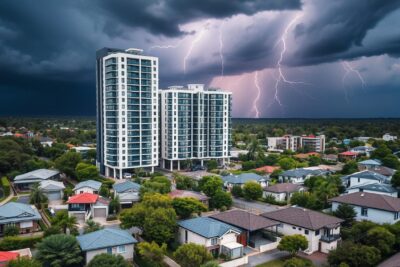
Protect Your Home with Earthquake Insurance Canada

About 4,000 tremors happen across the country every year, and many basic home plans do not cover the damage they can cause. You need to know what protection you must add so your family and home are not left exposed.
This short guide gives you clear, practical information so you can decide if added coverage is right for your budget and home. We explain what a standard home policy includes and why you often must add a separate endorsement.
We also show where the highest risk lies, what coverage typically pays for, and how to compare quotes. For more regional detail, see this helpful resource on preparedness and policy options at regional coverage guidance.
Expect a friendly buyer’s guide that helps you weigh costs, deductibles and safety steps. If you want a broader view on property cover and related risks, check this overview here: private estate home cover overview.
Table of Contents
- Do you need earthquake coverage in Canada? Understanding your regional risk today
- What earthquake insurance covers and what it doesn’t
- Costs, deductibles and what drives your premium
- How to shop for earthquake insurance Canada and compare providers
- Your next steps to protect your home and stay prepared
Do you need earthquake coverage in Canada? Understanding your regional risk today
Not all parts of the country face the same level of seismic threat; location matters. Use local data to decide if extra protection for your home is sensible for your situation.
High, moderate and low risk areas across the country
High-risk zones include coastal British Columbia and parts of the Yukon, where major events are most common. The Ottawa–St. Lawrence corridor, including Montreal and Quebec City, also shows notable potential.
Moderate pockets appear near the western shore of Lake Ontario and western New Brunswick. Low-risk areas have a much smaller chance of severe shaking, but no place is zero risk.
How to gauge your risk
Start by locating your address on Canada’s seismic hazard map. Natural Resources Canada notes high-risk regions have about a 30% chance of a significant-damage event in 50 years, moderate 5–15%, and low less than 1%.
Look at local history, soil type, and proximity to faults. If you live near Vancouver or Victoria, factor in the 12% and 21% probabilities for a magnitude 7.0 event by 2054 when comparing quotes for home insurance and planning mitigation.
- Check the seismic map to classify your area and guide your choices.
- Ask your broker how your region’s rating affects premiums for home insurance policies.
- Remember risk changes as models and local data update over the years.
What earthquake insurance covers and what it doesn’t

Understand which losses are paid after shaking and which ones you must insure separately to avoid surprises. Read the details so you can compare quotes and limits with confidence.
Dwelling, contents and additional living expenses
- Your dwelling coverage helps pay to rebuild or repair the structure of your home when it suffers earthquake damage. Confirm whether the valuation is replacement cost or actual cash value.
- Contents coverage replaces personal items damaged by shaking. Check item limits and ask about scheduling valuable items to avoid gaps.
- Additional living expenses pay for temporary housing, meals and transport while your home is uninhabitable. Verify daily caps, total limits and how long benefits last.
Fire Following protection
Fire caused by a ruptured gas line after shaking is commonly covered under the endorsement. This means your policy can pay for losses from the resulting blaze even if the initial event was seismic.
"If a quake causes a gas line break and fire, Fire Following usually covers the loss."
Ground movement specifics and exclusions
Some policies include ground-movement perils like landslides and liquefaction. These can cause foundation failure and major damage to your property confirm the exact wording so you know what is paid.
Expect clear exclusions. Tsunamis and overland flood are not covered by standard quake endorsements; you may need separate flood protection for those perils.
- Ask whether water from broken pipes is covered by the endorsement or your base policy.
- Comprehensive auto cover typically protects vehicles from shaking-related loss.
- Review deductibles and whether separate deductibles apply to dwelling, contents and additional living expenses.
For regional guidance and practical steps, see this quick primer. For a broader look at homeowner cover options, review this comprehensive overview.

Price factors can be surprising; learn which elements push your annual cost up or down.
Your premium reflects local risk, your home’s construction and number of storeys, chosen limits and the deductible you select. Industry-wide forces such as updated risk modelling, rising rebuild costs and reinsurance pressures also push prices higher.
Deductible math made simple
Deductibles are usually a percentage of the insured limit. On a $300,000 limit a 2% deductible is $6,000, 5% is $15,000, 10% is $30,000 and 20% is $60,000. Know this out-of-pocket amount before you buy.
You can lower annual cost by adjusting limits, increasing your deductible, or installing monitored alarms. Monitored fire or burglar systems may cut premiums by up to 10%.
- Compare sample annual costs: Toronto $15; Winnipeg $25; Montreal $178; Edmonton $284; Halifax $213; Vancouver $332; Richmond $515 for a $300,000 house and contents.
- Review your home insurance policies yearly to keep limits aligned with rebuilding costs and avoid being underinsured.
- Bundle cover for discounts and document your property with photos and estimates to speed any claim for damage.
For regional specifics and options on adding quake coverage, see this provincial resource or read a broader homeowner guide for comparison: provincial quake options and home insurance guide.
How to shop for earthquake insurance Canada and compare providers

Gather key facts about your home first. List the address, year built, construction type, square footage and recent upgrades. This helps online quote tools show realistic prices and coverage options quickly.
Quick steps to compare quotes online from Canadian insurers
Start with a few minutes of prep. Enter the same property details into several quote engines across canada to see real differences in premiums and coverage. Filter for providers that explicitly offer earthquake coverage in your regions.
Homeowners, renters and business: choosing the right policy
Homeowners should match limits to full replacement cost for the home and property. Renters focus on contents and additional living expenses. Small businesses need property, contents and loss of income protection for downtime.
Availability and gaps: when providers limit coverage
Some insurers restrict availability in high-risk areas such as british columbia and parts of the Ottawa–St. Lawrence corridor. If your current company won’t offer the endorsement, consider a provider that does.
Smart questions to ask
- Is Fire Following included automatically?
- Are there contents sub-limits I should increase?
- Does the policy cover water from burst pipes after a quake, or is separate flood needed?
- Are separate deductibles applied to dwelling, contents and additional living expenses?
Keep written quotes and wordings so you can compare apples-to-apples before you bind a home insurance policy. Confirm comprehensive auto cover too, so vehicles have protection if falling debris or structural collapse causes loss.
Your next steps to protect your home and stay prepared
A quick plan and a few retrofits can cut loss and help your family stay safe for at least 72 hours after an event.
First, confirm your earthquake insurance and policy limits match your home’s replacement cost. Make sure coverage includes contents and additional living expenses and pick a deductible you can afford.
Prepare a three-day kit with water, food, meds, chargers and a copy of your policy. Walk through your house and secure tall furniture, brace water heaters and fit flexible gas and water lines to reduce fire and water damage.
Book a licensed engineer to prioritise retrofits if you live in british columbia or along the st. lawrence corridor. For practical retrofit steps and fastening methods, see this government guide on seismic strengthening.
Finally, update your contents inventory, ask about discounts for monitored alarms and bundling, and rehearse your household drill. Preparation plus the right coverage protects your family, property and peace of mind.
🏠 Explore More Home Insurance Guides
View All Home Articles → Protect Your Property with Disaster Protection for Landlords Australia
Protect Your Home with Flood and Fire Insurance USA

Emergency Home Recovery Insurance USA: Get Covered

Natural Disaster Coverage Australia: Insurance for You
Is Your Home Covered? Storm Damage Home Insurance
Go up
Leave a Reply