
Connected Home Insurance Policy Canada
You want practical guidance on how smart tech can truly help protect your home and possibly lower what you pay. This guide shows which devices insurers accept today and which are mainly conveniences.
Some monitored alarms may earn about a 5% premium break, but monthly monitoring fees can change the math. Flood and moisture sensors limit loss, yet many providers still give few breaks for them.
We’ll explain how to pick devices that really reduce risk, how coverage treats your gadgets as belongings, and what proof you’ll need at claim time. You’ll also learn when to time upgrades so providers will consider them at renewal.
Invest smart by choosing tech that lowers real risk, not just adds gadgets. That way you can protect home, save money and strengthen coverage over time.
Table of Contents
- Smart homes and home insurance in Canada today
- Map your biggest risks before you buy devices
- Choose smart home technology that actually reduces risk
- Monitored alarm systems: the one category that commonly earns a discount
- Flood sensors and leak shut‑off: preventing costly basement claims
- Smart smoke and carbon monoxide detectors: faster alerts, fewer losses
- Smart locks and doorbells: convenience vs. potential cyber exposure
- Thermostats, lights, and garage controls: security and savings without guaranteed premium cuts
- Connected home insurance policy Canada: how to work with providers
- Protect your data: keep your smart home and policy safe
- Put it all together to lower risk and potentially your premium
Smart homes and home insurance in Canada today
You’re seeing more smart home tech in houses across the country, but that doesn’t always mean lower premiums right away. Insurers most often recognise a professionally monitored alarm as a reason for a break.
Water claims drive many large payouts. Average finished‑basement flood repairs can reach about $43,000, so insurers focus on devices that stop or alert to leaks fast.
"Staying claims‑free and documenting reliable devices matters more to most insurers than flashy app features."
- Adoption of smart technology is rising, yet discounts remain limited beyond monitored alarms.
- Insurers reward tools that actively prevent losses; convenience gadgets usually don’t cut your rate.
- Some U.S. and European programs give device-based breaks, but Canadian uptake is smaller for now.
| Device type | How insurers view it | Typical recognition |
|---|---|---|
| Monitored alarm | Risk‑reducing, verified | Often earns a discount |
| Water sensors | Prevents costly claims | Limited recognition; growing interest |
| Doorbells, locks, thermostats | Convenience or energy tech | Rarely affects premium |
Map your biggest risks before you buy devices
Map the hazards that most often cause costly repairs, then choose devices that stop losses early.
Water damage and flood: Water is a top cause of loss and a finished flooded basement can cost about $43,000 to repair. Place sensors at the water heater, under sinks, near laundry, and by your sump. Select sensors that alert your phone and, if possible, trigger an automatic shutoff valve to limit damage.
Theft and intrusion: A monitored alarm often improves insurer recognition. Pair it with door and window contacts and exterior video that captures faces and plates. Smart doorbells stream video to your phone and deter theft, while locks add convenience but require cyber caution.
Fire and smoke: Choose interconnected smart detectors that send real-time smoke and CO alerts to your phone and pinpoint the room. Faster awareness shortens response time and reduces damage.
| Risk | Devices to prioritize | Why it matters |
|---|---|---|
| Water/flood | Leak sensors, shutoff valves | Stops damage early; cuts large basement claims |
| Intrusion | Monitored alarm, exterior video, door sensors | Deters thieves; documents events for a claim |
| Fire/smoke | Interconnected smoke/CO detectors | Quicker alerts; limits fire damage |
Choose smart home technology that actually reduces risk

Prioritize technology that stops damage before it starts. Focus on tools that give early alerts and clear proof you can show your insurer.
Monitored alarm systems: the one category that commonly earns a discount
Monitored alarm systems are the clearest path to a discount. They often earn about a 5% break, but monitoring costs average $30 a month. Confirm accepted certifications with your provider and keep the monitoring contract for proof.
Flood sensors and leak shut‑off: preventing costly basement claims
Place flood sensors low near heaters, laundry and the sump. Pair sensors with an automatic shut‑off valve on the main line. One early alert can spare a flooded basement and major disruption.
Smart smoke and carbon monoxide detectors: faster alerts, fewer losses
Choose smart smoke and CO units that ID the room and push alerts to your phone. Look for self‑testing and battery diagnostics so they work when seconds matter.
Smart locks and doorbells: convenience vs. potential cyber exposure
Use smart locks and video doorbells to control access and deter porch theft. Balance convenience with cyber hygiene: unique passwords, two‑factor authentication and firmware updates.
These upgrades reduce hazards and energy use but rarely change your rate. They still help you reduce risk and make your home safer.
- If you want a lower insurance rate, start with a professionally monitored alarm system and keep documentation.
- Capture receipts, serial numbers and installation photos for every device.
- Prefer systems that integrate alarms, sensors and video for simpler logs and sharing clips with authorities.
- Review your setup yearly to close weak points and match what insurers recognise.
| Device type | Insurer recognition | Practical tip |
|---|---|---|
| Monitored alarm system | Often earns a discount | Keep contract and certification for proof |
| Flood sensors + shut‑off | Limited recognition; strong loss prevention | Place low; pair with main shut‑off valve |
| Smart smoke/CO | Growing acceptance for loss reduction | Choose room‑identifying, self‑testing units |
| Smart locks / doorbell video | Mostly convenience; some deterrence | Use strong passwords and 2FA; keep firmware updated |
Learn more about smart home devices that insurers accept to make choices that truly reduce risk and may help lower insurance premium.
Connected home insurance policy Canada: how to work with providers
Before you install gear, learn what insurers will actually credit on your next renewal. That saves money and avoids surprises when you file a claim.
What Canadian insurers actually discount right now
Most carriers clearly recognise a professionally monitored alarm system. That often yields about a 5% break. DIY cameras or standalone sensors usually do not.
Monitored vs. DIY systems: documentation, certifications, and eligibility
Ask your providers which categories qualify for a rate break and whether a monitor needs specific certification.
Keep monitoring contracts, receipts and photos. These documents prove eligibility and speed up any underwriting review.
Claims, deductibles, and proving ownership for your smart devices
Devices you own are usually covered as personal property under your coverage, subject to your deductible.
If you’re submitting claim paperwork, include serial numbers, model details and proof of purchase. That helps resolve claims faster.
- Call first: confirm if smart locks or app‑linked leak alerts affect underwriting.
- Weigh costs: for small devices, your deductible may exceed the repair value self‑insure if practical.
- Review at renewal: ensure protections are coded correctly so your house gets full credit.
| Question to ask | Why it matters | Evidence to supply | Expected result |
|---|---|---|---|
| Do you recognise monitored alarms? | Some carriers offer measurable discounts | Monitoring contract and certification | Possible premium reduction (~5%) |
| Do DIY cameras count? | Usually improve safety but rarely alter rates | Installation photos only | No guaranteed discount |
| Are app‑linked flood sensors recognised? | Growing acceptance; varies by provider | Alert logs and install receipts | May affect endorsements or future offers |
| What to send when submitting claim? | Proves ownership and loss details | Receipts, serials, photos, and monitoring logs | Smoother claim settlement |
For more on devices insurers accept, see a practical guide to accepted systems at smart home devices insurers accept. If you compare providers on broader savings, a quick market check can help see options for lower rates at low premium comparisons.
Protect your data: keep your smart home and policy safe
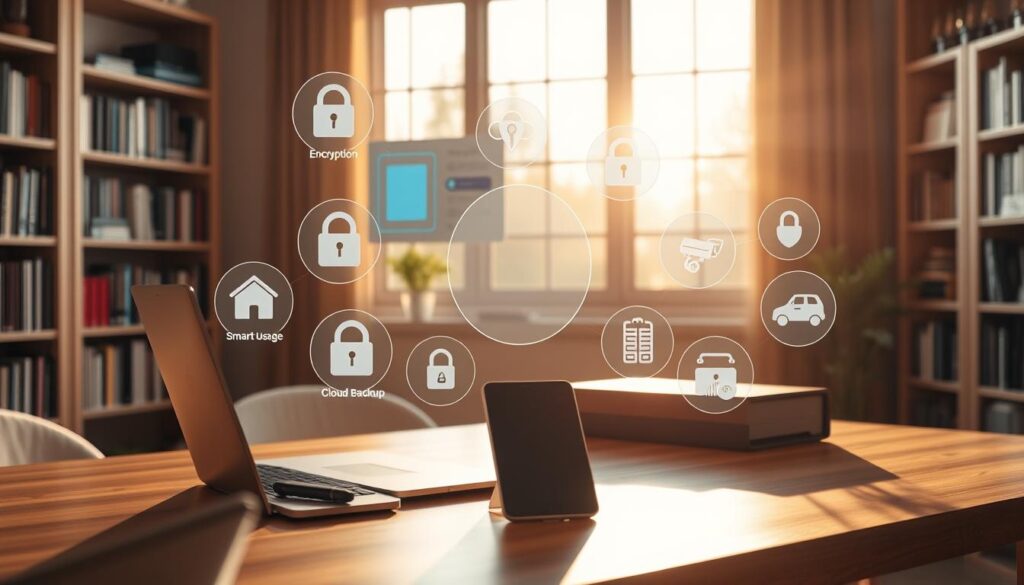
If you want the tech to protect your house, start by protecting the data those devices collect. Smart systems can log location, voice commands and search history, so review privacy settings before you add new gear.
Reduce cyber risk with strong passwords, updates, and hard‑wired options
Lock down accounts with unique, complex passwords and two‑factor authentication where available. Change default admin credentials on day one.
Keep apps and firmware updated on your phone and each device. Schedule quick security checkups so updates and password rotations happen on time.
When security matters most, prefer Ethernet or other hard‑wired connections for critical devices. Wired links cut interception risk and keep alerts flowing during busy networks.
Understand privacy policies and how identity theft coverage can help
Read each product’s privacy policy to see what data is stored and where. Disable unnecessary collection and segment your network with a guest SSID for visitors and lower‑trust devices.
- Maintain an inventory of every device, including serials and MACs, so you can act fast on vulnerabilities.
- Train your household to use the right phone settings—screen locks and biometrics—to reduce misuse and save money over time by avoiding breaches.
- If identity theft occurs, ask your insurance professional whether your coverage helps with legal fees, lost wages and document replacement.
For broader comparisons and to check potential savings, see a quick market option for lower rates at low premium comparisons.
A few practical moves can turn smart devices into real loss prevention and, over time, lower what you pay.
Build a layered plan that targets your biggest local risks: place flood sensors with shut‑offs near tanks and basements, use a monitored alarm for intrusion, and fit smart smoke units for faster alerts. Test alerts to your phone and keep batteries fresh.
Do the math on monitoring fees versus any rate cut and keep receipts, serial numbers and installation photos so submitting claim details is straightforward. Use smart lock codes and a front‑door video view to deter theft, and update firmware often.
Review devices at renewal and ask which qualify now. For more tips on reducing premiums, see practical ways to lower your home insurance premium.
🏠 Explore More Home Insurance Guides
View All Home Articles → Get comprehensive homeowners coverage USA for Your Home

Find the Best Home Insurance for Homeowners USA

Get Quotes for Mortgage-Linked Home Insurance UK
Home Protection Insurance Canada: Safeguard Your Home

Property Owner Insurance Policy Australia: Protect Your Assets

Luxury Home Insurance USA 2026: Find the Right Coverage for Your Home
Go up
Leave a Reply