

Affordable Electric Vehicle Insurance for Your EV
Fact: a 100‑kWh Tesla battery once cost up to $15,500 to replace, a number that still surprises many owners.
You want coverage that protects your car without wasting your money. This guide shows how to save on rates and find the right coverage for your electric car.
Repair costs can rise because replacement packs, specialized parts, and fewer trained technicians can make some crashes costly. At the same time, studies show EVs have fewer collision and bodily‑injury claims, and battery prices have fallen over time.
In this section, you’ll learn why today's costs can be higher and how falling battery prices, tax credits, and lower fuel and maintenance bills can offset ownership costs. Use quotes from multiple providers to compare rates and spot real savings.
Start here to plan smarter, avoid surprises, and turn research into real savings on your vehicle insurance with practical next steps and a quick checklist.
Find concrete ways to compare providers and lock in better auto coverage at this helpful resource: low premium car insurance.
Table of Contents
- Start here: Your Buyer’s Guide to lower EV insurance costs in the United States
- What electric car insurance really costs and why EVs often cost more to insure
- Key factors that influence your EV insurance rates
- Affordable electric vehicle insurance: EV models that are cheaper to insure
- Best places to shop: traditional insurers vs. Tesla insurance
- Smart ways to save on EV coverage without cutting essential protection
- Your next move toward lower EV insurance premiums
Start here: Your Buyer’s Guide to lower EV insurance costs in the United States
Begin with the basics: have driver details (name, address, license) and your electric vehicle’s VIN, year, make, model, and estimated annual mileage. Insurers need this to produce accurate quotes quickly.
Most major insurance companies in the U.S. price EVs similarly to combustion engine cars. You can often get multiple auto insurance quotes fast if you have recent driving history and the coverages you want.
When you shop, compare at least three providers side by side. Rates vary by company and state. Consider bundling home and car policies to lower total costs.
- Check discounts Travelers is one of the few companies noted for hybrid/EV discounts.
- Decide liability-only versus full coverage based on loan terms and your comfort with repair bills.
- Factor in total cost of ownership: charging vs. fuel, maintenance, and local repair access.
Make a short list of models you like and verify quotes for each trim before you buy. Keep documentation ready so you can lock in the best rates when you find them.
What electric car insurance really costs and why EVs often cost more to insure
Insurance for modern plug-in cars often looks higher on paper, but the reasons are clear. You’ll see a mix of higher repair bills, pricey parts, and unique replacement risks that push rates up for some models.
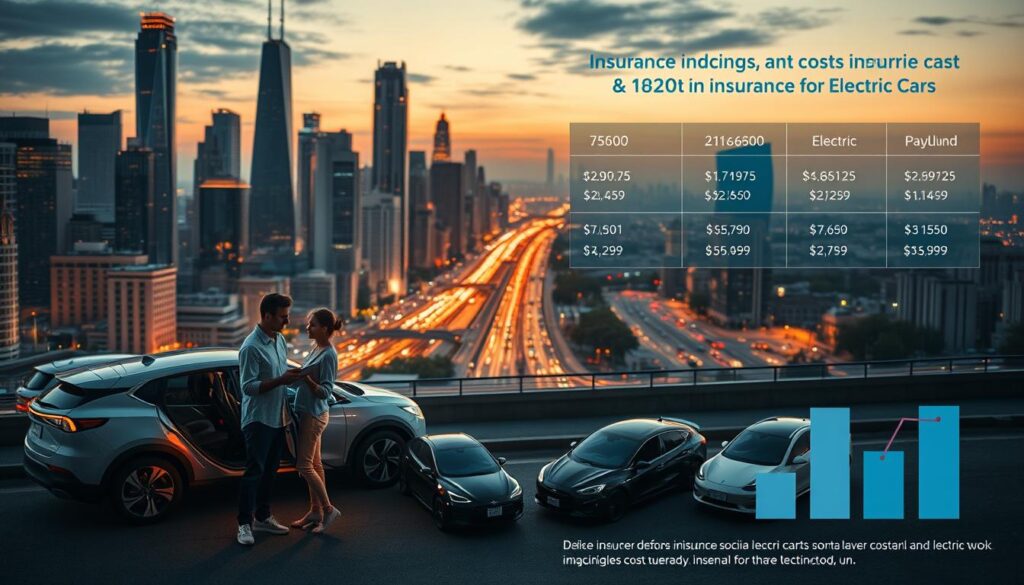
Typical figures help explain the gap. A Tesla Model 3 averages about $61 per month for minimum coverage and roughly $271 per month for full coverage. Annual repair averages can run near $832, though a single claim can cost much more.
- Battery and replacement: smaller packs have come down in price, but large packs have been cited between $5,999 and $15,500 to replace.
- Repair complexity: certified technicians and calibration add labor costs after collisions.
- Claim trends: studies show fewer collisions but costlier property damage claims versus combustion engine cars.
| Model | Min monthly | Full monthly | Avg annual repair |
|---|---|---|---|
| Tesla Model 3 | $61 | $271 | $832 |
| Typical EV (range) | $50–$90 | $220–$320 | $600–$1,200 |
| Comparable ICE car | $40–$80 | $180–$260 | $500–$900 |
"EVs had fewer collision and bodily-injury claims, but property damage claims tended to be more expensive."
Key factors that influence your EV insurance rates
Insurers price policies by pairing details about your car with facts about your driving history. That mix shapes the quote you see and the coverages you should pick.
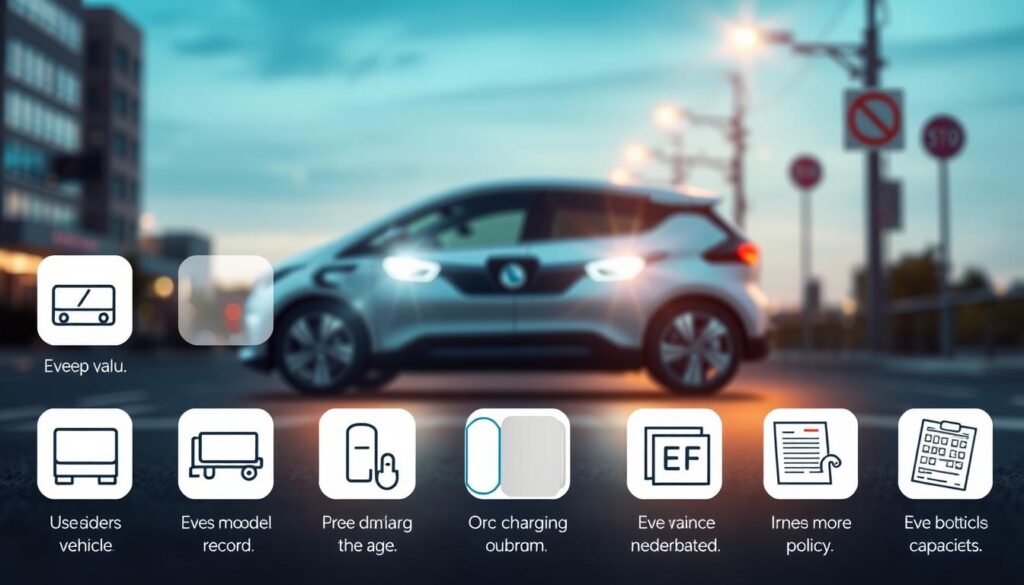
Vehicle-specific variables
Make, model, and safety ratings matter because insurers look at claim frequency and repair bills for similar models.
IIHS-HLDI found fewer collisions for some EVs, yet property damage claims can cost more when parts or recalibration are needed.
Your profile and coverage choices
Your age, driving record, ZIP code, and annual mileage shape premiums. Dense traffic, theft rates, and weather raise the risk profile.
Coverage selections and deductibles also control costs. Liability-only lowers monthly spend but increases your exposure after a claim.
| Factor | How it affects rates | What to check |
|---|---|---|
| Make & model | Higher repair costs = higher premiums | Look up claims and parts availability |
| Safety tech | Fewer crashes, possible higher repair bills | Verify sensor repair costs |
| Your profile | Clean record & low miles cut premiums | Compare quotes from multiple providers |
Compare at least three providers and use a focused tool like cheap auto insurance for new drivers to see tailored car insurance options for your ZIP code.
Affordable electric vehicle insurance: EV models that are cheaper to insure
Start with a shortlist of models that insurers flag as lower-cost to repair and claim. Below are the top picks from a major California insurer's 2025 list. These cars tend to deliver better savings in many U.S. ZIP codes.
Top budget-friendly EVs to insure today
- Chevrolet Blazer EV
- Chevrolet Equinox EV
- Nissan Leaf
- Kia Niro EV
- Hyundai Kona EV
- Hyundai IONIQ EV (all models)
- MINI Cooper SE
- Fiat 500e
- Ford F‑150 Lightning
- Subaru Solterra / Toyota bZ4X
Why these models rank well
Favorable claims history and broad parts networks cut repair timelines. That lowers what companies pay and can shrink your monthly rate.
Strong safety performance reduces claim frequency, while easier repairability trims labor costs. Together, those factors drive the lower cost to insure these vehicles.
Before you buy: verify quotes
Request quotes for the exact trim and packages. Bigger wheels, premium audio, or advanced driver aids can change coverage pricing.
Compare rates for the cars you like and validate premiums using your garaging ZIP code. For a deeper look at regional differences and sample lists, see this roundup of the cheapest EVs to insure.
"Pick models with steady parts supply and strong crash records to help lock in better rates."
Best places to shop: traditional insurers vs. Tesla insurance
Choosing between mainstream carriers and a maker-backed policy can reshape your quote and claims experience. Many national insurance companies treat electric models much like comparable gas cars, so you’ll often get comparable rates and broad repair networks.
Major companies and hybrid/EV discounts
Compare well-known providers and ask about EV or hybrid discounts. Travelers is one example that advertises savings for some plug-in models.
Tesla Insurance 101
Tesla Insurance uses a Safety Score telematics system where available. That score can lower what you pay when your driving habits are consistently safe.
Coverage includes liability, comprehensive, and collision. Tesla also offers an Autonomous Vehicle Protection Package with cyber identity fraud expense coverage, wall charger protection, and electronic key replacement.
Availability notes
Tesla’s policy is available only in select states. In California, the product exists but regulators bar telematics-based pricing, so Safety Score does not set rates there.
- Request side-by-side quotes with matching coverage limits and deductibles.
- Consider claims service, repair network access, and nearby certified shops.
- Check for usage-based programs that reward safer or lower-mileage driving.
"Request side-by-side quotes to see whether a traditional company or Tesla offers better value for your car and driving profile."
Smart ways to save on EV coverage without cutting essential protection
Smart choices can trim your premium without leaving you underprotected. Compare at least three quotes with identical limits and deductibles so you can see true apples‑to‑apples rates. Then bundle home and car policies to unlock extra savings with many providers.
Compare multiple quotes and bundle for bigger savings
Ask for matching coverage and deductibles from each company. That makes rate differences clear and helps you pick the best value.
Stack discounts
Stack easy discounts like safe‑driver telematics, auto‑pay, paperless billing, and good‑student credits. Travelers and some other carriers offer EV/hybrid discounts; Tesla ties pricing to a Safety Score in many states.
Right‑size your coverage
Keep full coverage on higher‑value cars and choose a deductible often around $1,000 that cuts your premium without creating a painful out‑of‑pocket hit after a claim.
Offset costs with credits, rebates, and smart charging
Check federal tax credits up to $7,500 and utility rebates in your area. Charging at home during off‑peak hours and installing a proper home charger lowers operating costs and can help you save money on total ownership.
- Consider usage‑based programs if you drive less; telematics can reduce rates for smooth drivers.
- Schedule a policy review every six months to capture life changes that lower premiums.
- Add rental reimbursement and roadside coverage to stay mobile while repairs or replacements are completed.
- Monitor long‑term trends falling battery prices and more repair shops can reduce future costs.
"Compare quotes, bundle where it makes sense, and use discounts to chip away at your premium."
For a deeper price comparison and shopping tools, check a practical guide to budget auto insurance comparison and learn more about typical cost drivers at EV insurance cost.
Before you buy, set a simple plan: pick two or three electric car models you like, then get at least three car insurance quotes for your exact trim and ZIP code.
Match coverage limits and deductibles so you compare true rates. Ask each insurer about bundling, telematics, and EV-specific discounts to see how those options change your premium.
Compare one traditional provider and, if available, Tesla Insurance in your state. Remember Tesla cannot use telematics for pricing in California, and regional cost data may vary see a broader market snapshot with regional cost data.
Factor total ownership costs charging, maintenance, and incentives then set a calendar reminder to requote at renewal. For a practical checklist and shopping tips on full coverage, consult this full coverage guide.
🚗 Explore More Auto Insurance Guides
View All Auto Articles → Compare EV Insurance Costs - Save on Your Policy

Best Insurance for Hybrid and EV Owners in US
Lower Your Premiums with Green Vehicle Insurance Discounts
Find the Best Auto Insurance for Tesla Drivers
Use Our Cheap Auto Insurance Comparison Tool

Car Insurance Comparison Sites: Compare Quotes & Save
Go up
Leave a Reply