

Adventure sports travel insurance USA: Protect your trip

Surprising fact: Most standard plans exclude common high-risk activities like hiking, biking, snorkeling, and moped riding yet a comprehensive policy averages about $30 per day or roughly $419 for a 14-day trip.
You need clear protection for the activities you plan. Many policies leave gaps, so look for explicit coverage that includes emergency medical care and a $1,000,000 medical evacuation benefit.
Good plans can cover search and rescue, lost or damaged gear, and prepaid fees such as lift tickets or tee times canceled by weather. Some providers like World Nomads and Tin Leg include activity lists in base plans, while others such as Battleface, Travelex, and Travel Guard offer add-on riders.
Before you buy, confirm which activities are listed, the limits for emergency care, and what proof you must show to file a claim. With the right policy in place, you protect your budget and focus on your plans instead of worrying about the unexpected.
Table of Contents
- Your quick buyer’s snapshot for 2025
- What adventure travel insurance covers that standard plans don’t
- Adventure sports travel insurance USA
- Activities typically covered vs. commonly excluded
- Realistic costs and what drives your premium
- How to choose the right policy for your itinerary
- Provider and plan types you’ll see in the U.S. market
- Deep dive: sports-specific considerations
- Claim-ready: documents and proof you should carry
- Gear up and go with confidence
Your quick buyer’s snapshot for 2025
Before you book, get a fast, clear checklist that matches coverages to the activities on your itinerary. Start by confirming whether planned sports activities appear in the policy, since many standard travel insurance plans exclude common options like hiking and snorkeling.
Expect a ballpark cost of about $30 per day for comprehensive protection; a typical 14-day plan runs roughly $419. Aim for strong emergency medical limits (think $100,000–$500,000) and medical evacuation up to $1,000,000 to cover remote incidents.
- Confirm listed activities and any elevation or guide requirements before purchase.
- Choose primary emergency medical coverage where available to avoid filing through your health plan first.
- Add search and rescue or gear protection if you’ll be in remote areas or depend on rented equipment.
- Look for reimbursement for prepaid sports fees if weather or injury cancels outings.
Tip: Use a marketplace that filters travel insurance policies side-by-side. Compare coverage, limits, and cost quickly, and keep receipts and certifications ready to speed any claim.
What adventure travel insurance covers that standard plans don’t
When normal policies won’t pay for an on-trail rescue or gear loss, specialty cover steps in. You get benefits aimed at active itineraries that standard travel insurance often excludes.
Emergency medical and evacuation
Emergency medical care for a covered injury is central. If local clinics can’t treat you, evacuation moves you to the nearest adequate facility sometimes by helicopter which saves time and large medical expenses.
Search and rescue, gear protection, and prepaid fees
Search & rescue may be available as a built-in benefit or an add-on. Policies also reimburse lost, stolen, or damaged equipment and pay for rental gear when delays occur.
Weather cancellations can trigger reimbursement for prepaid lift tickets, tee times, or guided outings you can’t use due to storms or illness.
"Confirm activity lists and any certification rules before you buy to avoid claim denials."
- Keep receipts and confirmations for faster claims.
- Check if high-risk actions like scuba diving, bungee jumping, or backcountry skiing need riders.
- Compare plans and filter for "Search & Rescue" or equipment cover options; marketplaces simplify this see example adventure sports plans at adventure sports plans.
Adventure sports travel insurance USA
Even when you stay stateside, your regular plan can leave you exposed to big bills and missing trip protections.
Within the U.S., primary health coverage often handles emergency care for injuries. But it usually won’t pay for trip-centered losses like prepaid fees, equipment delay, or guided-tour refunds.
How U.S.-based trips differ from international adventures
Overseas, most providers won’t accept your domestic health plan, so travel medical and medical evacuation become essential. At home, the main gap is non-medical benefits and out-of-network bills.
When your domestic health plan may still leave gaps
- Medical expenses: Out-of-network care can create large bills even for routine ER work.
- Coverage gaps: Standard travel plans often exclude high-risk activities unless you add a rider.
- Policy support: A dedicated plan can coordinate emergency transport and hospital admissions—services your card won’t provide.
- Practical tip: If you mix casual and high-risk activities, confirm each activity’s status and document dates and bookings for faster claims.
To compare options for your next trip, compare plans that list covered activities and medical evacuation limits.
Activities typically covered vs. commonly excluded
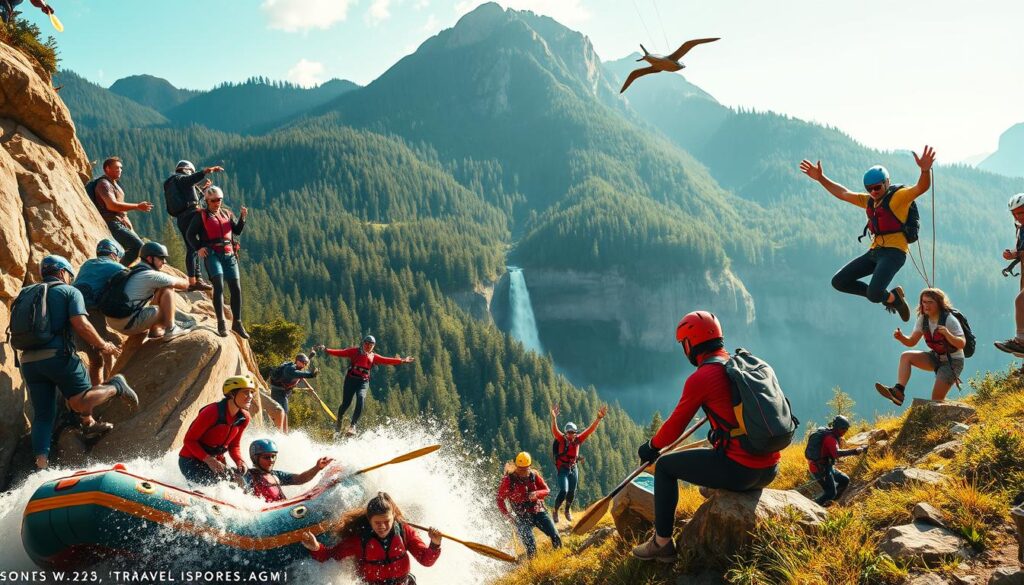
A single plan rarely covers every pursuit you must verify which activities are included and which demand riders. Policies group water, land, and air pursuits and then note limits or exclusions. Read the list so you know what a claim would need.
Water: snorkeling, surfing, kayaking, and scuba diving
Water activities like snorkeling, surfing, and kayaking are often included in base plans. Scuba diving may be limited by depth and require proof of certification or a qualified dive master.
Land: hiking, mountain biking, climbing, backcountry skiing
Hiking and mountain biking usually fall under standard cover, but technical climbing and backcountry skiing can trigger special rules. Some policies require a guide, and altitude or equipment limits may apply.
Air: skydiving, paragliding, hot air ballooning, bungee
Airborne thrills are commonly excluded from a standard policy. Skydiving, paragliding, hot air ballooning, and bungee jumping often need an add-on or a specialized plan to get coverage.
Where riders are required
High-risk activities such as heli-skiing, off-piste skiing, deeper scuba dives, and technical climbing usually sit behind riders. Check stated limits dive depth, engine size for ATVs, or guide requirements to be sure your plan will pay.
"If an activity isn't listed, assume it's excluded and get written confirmation or a rider before you go."
- Keep certifications (PADI/NAUI, climbing credentials) and guided tour confirmations handy.
- Confirm each activity on your policy to avoid denied claims.
- Budget for add-ons when your itinerary includes high-risk activities.
A practical price benchmark lets you compare policies with confidence.
Benchmark: Marketplace data shows comprehensive plans average about $30 per day, and the mean policy ran roughly $419 for a 14-day trip. Use that figure to set expectations before you start quoting.
Major price drivers: Your age, destination, trip length, total trip cost, and the specific activities you cover shape premiums. Higher limits for emergency care or evacuation will raise the price but can save you from large expenses later.
- The activities you add for example, off-piste skiing or deeper scuba often require riders and increase costs.
- Coverage for expensive equipment can add to the premium; watch per-item caps.
- Riders may be charged as a percentage increase or a flat fee depending on the policy.
When you compare options, look beyond the sticker price. Align benefits with your itinerary, and see a quick calculator on cost at how much does travel insurance cost.
How to choose the right policy for your itinerary
Pick a policy that mirrors your itinerary, not one that forces you to guess what counts as covered.
Start by listing must-do activities and then confirm those exact activities are named in the plan’s activities covered. If an activity is missing, add a rider or pick a different policy that lists it explicitly.
Set strong medical and evacuation limits
Target six-figure primary medical limits and medical evacuation of $1,000,000 or more when you’ll be far from care. Higher limits reduce the risk of large out-of-pocket expenses.
Protect gear and add search & rescue
If you bring or rent specialized equipment, add equipment rental or delay coverage and raise sub-limits for high-value items. Also confirm whether search and rescue is included or sold as a rider.
Mind exclusions and document requirements
Check for pro/amateur clauses, altitude caps, off-piste/backcountry rules for skiing, and scuba certification limits. Keep permits, certificates, and receipts handy to speed any claim.
- Use marketplace filters to surface plans that list your activities and then layer riders as needed.
- Balance price and protection: spending a bit more for proper limits often saves you from big expenses later.
- Choose a plan with broad listed activities if you expect spontaneous choices during the trip.
"Confirm activity lists and required documents before you go to avoid denied claims."
Provider and plan types you’ll see in the U.S. market
In the current market, some providers bake activity cover into the base plan while others sell targeted riders for higher-risk pursuits.
Plans that include activity coverage: Tin Leg’s Adventure policy is a clear example its base plan lists covered activities so you know what’s included at purchase. World Nomads uses tiers (Standard, Explorer, Epic) that expand activity lists as you step up.
Plans that use add-on riders
Many U.S. carriers offer lean base policies and sell riders for specific needs. Examples include Battleface Discovery, Travelex (Ultimate/Advantage/Essential add-ons), Travel Guard (Deluxe/Preferred riders), Travel Insured’s Platinum add-on, and WorldTrips’ Elevate/Explore options.
Market benchmarks and buying tips
Expect medical coverage commonly between $100,000–$500,000 and evacuation up to $1,000,000 on stronger plans. If your itinerary includes diving or bungee jumping, confirm depth, certification, or activity-class rules before you buy.
- Use comparison marketplaces to filter travel insurance policies by listed activities and coverage amounts.
- Read each policy’s activity list naming conventions differ by carrier.
- When budgets are tight, prioritize emergency medical, evacuation, and gear protection, then add riders for the riskiest pursuits.
"Confirm what counts as covered and what documentation is required before you purchase."
For a specific add-on example, see Travel Guard’s adventure options at Travel Guard adventure plans.
Deep dive: sports-specific considerations
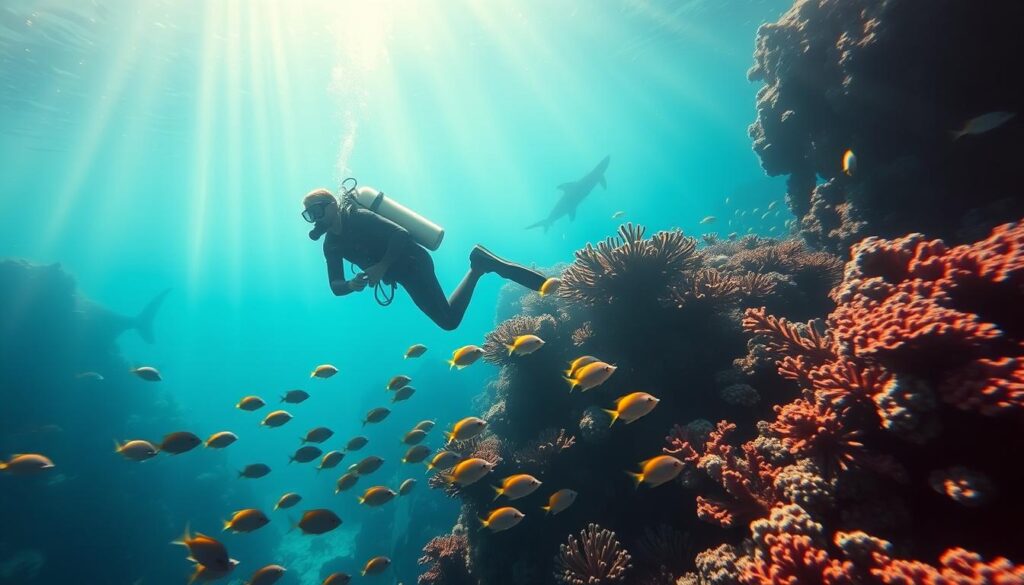
Policies treat water, mountain, and motorized pursuits very differently; check specifics early.
Scuba diving: certification, depth caps, and mixed gas
Scuba diving inclusions usually require PADI/NAUI/SSI proof and set depth caps (often near 30m / 100–130 ft).
Deeper or mixed gas dives commonly demand specialty coverage or a rider, and some plans require a dive master to be present.
Skiing and snowboarding: resort vs. backcountry and heli options
Resort skiing and basic snowboarding often appear in base coverage, but backcountry and heli-skiing usually need a rider.
Insurers may also require a certified guide or restrict cover inside avalanche zones.
Climbing and trekking: elevation thresholds and guide requirements
Climbing protections hinge on elevation many policies set cutoffs near 4,000–5,000 m.
Technical routes may need ropes, certified guides, or specific wording to validate a claim.
Motorcycles and ATVs: engine size limits and off-road restrictions
Some policies cap engine size or exclude off-road racing. Confirm whether rented equipment is covered and note per-item limits.
"Keep certifications, permits, and guide confirmations with you claims go faster when you can prove you met the policy's rules."
- Verify each activity appears by name in your policy.
- Check emergency medical and evacuation limits for remote water or mountain incidents.
- Carry certification cards and rental receipts on your phone and printed.
Claim-ready: documents and proof you should carry
Having key documents ready cuts the time it takes to file a claim and get paid. Keep a compact folder with both digital and paper copies of your main files so you can show proof at a moment’s notice.
Itineraries, receipts, certifications, and guided tour confirmations
Carry your itinerary and policy summary so you can reference cover limits, dates, and contact numbers quickly.
Save receipts for prepaid lessons, lift tickets, tee times, or equipment rentals; these speed reimbursement of out-of-pocket expenses.
- Keep certifications (PADI/NAUI cards, climbing permits) and guide confirmations to prove you met plan rules for higher-risk activities.
- For lost or delayed gear, collect airline or carrier delay notices and photograph serial numbers before departure.
- Log the exact date and time of incidents and get official incident or search-and-rescue reports when applicable.
"Organize documents in a shared folder so you and your companions can access files if a device is lost."
| Document | Why it matters | Where to store it |
|---|---|---|
| Itinerary & policy summary | Shows covered dates and contact info | Phone and paper copy |
| Receipts & prepaid fees | Proves expenses for reimbursement | Scanned folder + originals |
| Certifications & guide confirmations | Validates activity eligibility | Photo ID and cloud storage |
| Medical records & incident reports | Supports claims for injury-related coverage | Secure cloud + printed copies |
Gear up and go with confidence
Match your planned pursuits to a policy that pairs strong medical limits with activity-specific benefits. The best adventure travel options combine six-figure medical limits, a $1,000,000 evacuation benefit, and clear activity lists from providers like Tin Leg, Battleface, Travelex, Travel Guard, Travel Insured, and WorldTrips.
Prioritize a plan that names the activities you’ll do, adds search-and-rescue and gear cover, and states rider rules plainly. Keep certifications, guides’ confirmations, and receipts with you to speed any claim.
Use the $30/day cost benchmark to compare value and pick a policy that fits your trip. For an example activity list and more detail, check World Nomads’ covered activities page to see how providers document what's included.
✈️ Explore More Travel Insurance Comparisons
View All Travel Articles → Mountain Hiking Travel Insurance UK: Protect Your Trip
Scuba diving travel insurance Australia: Protect Your Dive

Backpacking Adventures Await in Australia
Get rock-climbing travel protection USA for Your Next Adventure
extreme adventure medical insurance Canada: Protect Your Adventures
Go up
Leave a Reply