

Compare Full Auto Cover Policies for UK Drivers

51% of customers could save £517.83 when they shop around rather than accept renewal offers, according to recent Consumer Intelligence data.
You can get a quote in minutes and see results from up to 160 UK providers, including well-known names like AXA, Tesco Insurance, Admiral, AA, RAC and Churchill.
This introduction shows how simple it is to compare car insurance and spot real savings.
Start by adding a few key details driver, address and occupation then choose one of three levels of cover and add vehicle information. The system returns multiple quotes so you can weigh price against benefits quickly.
Use live market data to see how your cost matches the average UK premium, currently about £757 a year, and shortlist insurance that fits your needs rather than chasing the lowest headline price.
Table of Contents
- What “full auto cover” means in the UK today
- Comprehensive vs Third Party, Fire and Theft: which protects you better?
- Comprehensive vs Third Party Only: the legal minimum compared
- Price reality check: what affects the cost of your policy
- Add-ons that change your level of protection
- compare full auto cover policies: how to line up features side by side
- Get quotes fast: the details you’ll need
- Aggregator breadth vs direct insurer perks
- Ways to save without cutting essential cover
- Special situations: temporary, young driver and black box policies
- Electric, hybrid and other vehicle types: what changes?
- Claims made simpler: what to do after an accident
- Legal essentials: driving other cars and minimum cover
- Trust and regulation: who’s behind your comparison
- Quick checklist before you choose your policy
- Ready to compare and get your quote in minutes
What “full auto cover” means in the UK today
It pays to know precisely what the highest level of car protection includes before you pick a policy. Below is a clear summary so you can see what is and isn’t covered.

Comprehensive cover at a glance
Comprehensive is the top level of protection. It pays for repairs or replacement of your car, and covers injuries to people and damage to property, regardless of who caused the accident.
This level also protects against fire, theft and attempted theft, and often includes extras such as windscreen repair or a courtesy car though you should make sure what’s standard and what is optional.
How it differs from TPFT and third party
Third-party, fire and theft (TPFT) covers liability to others plus fire and theft of your vehicle, but it won’t pay for your own accident damage.
Third party only is the legal minimum: it covers injuries to other people and damage to their property, but not your car or your own losses.
- Think about your driving patterns and risks when choosing a level.
- Check whether personal injury to you is included and the limits for people and property claims.
Comprehensive vs Third Party, Fire and Theft: which protects you better?
You’ll often find the real difference between policies shows up in what happens after an incident. Start by thinking about how often you use your vehicle and the likely risks where you live.
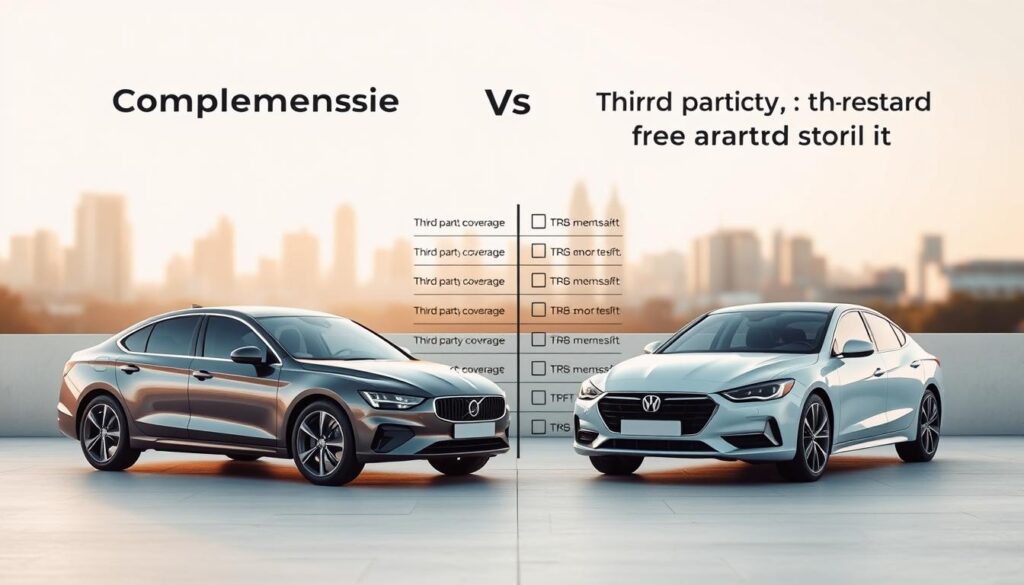
Accident cover for your car and others
Comprehensive typically pays for your repairs after an accident, regardless of who caused it, and it also covers third-party injury and property. That makes it the strongest protection for day-to-day driving.
TPFT handles third-party liability too, but it will not normally pay for your own accident damage. For many drivers that difference decides which car insurance policy suits them.
Fire, theft and vandalism scenarios
TPFT steps in for fire, theft and attempted theft, so it helps if your vehicle is targeted or parked on-street overnight. However, malicious damage such as vandalism is more often included under comprehensive.
When TPFT can look cheaper but cost you more
TPFT premiums can be lower up front, and that might suit older or low-value cars. But one at-fault accident could leave you paying repair bills, hire costs and downtime.
- Think about excesses, windscreen terms and whether a courtesy car is offered.
- For a daily driver, comprehensive can reduce financial risk after a claim.
- If you want to compare car options, check what each package includes for belongings and keys.
| Feature | Comprehensive | TPFT | Typical use |
|---|---|---|---|
| Accidental damage | Pays for your repairs regardless of blame | Not covered | Daily drivers; high-value vehicles |
| Fire & theft | Included | Included | Useful if at risk of fire theft |
| Vandalism & extras | Often included; more extras | May be excluded | Older cars may use TPFT |
The average UK premium sits around £757, but your price depends on age, location and driving history. Keep photos and receipts handy to support any claim quickly.
Comprehensive vs Third Party Only: the legal minimum compared
Third party only is the legal minimum you must hold to drive in the UK. It pays for injuries to other people and damage to someone else's property when you're at fault, but it does not repair your car or cover your own medical costs after an accident.
That means if you cause a crash you may face repair bills, hire costs and disruption. Younger drivers often pay higher premiums for either option, so age affects the price you see for an insurance policy.
Liability to others versus protection for you
Third party meets the law by protecting other people and their property. Comprehensive adds protection for your own car and often includes extras like windscreen repair or a courtesy car.
- Legal liability: third party pays for injuries to people and damage to property.
- Your vehicle: only comprehensive pays for accidental damage to your car.
- Third party can sometimes cost more for certain age groups or car types, so check quotes carefully.
- Consider voluntary excess, claims history and telematics if budget is tight.

Balance the legal minimum against how much you rely on your car. If you need reliable mobility, comprehensive may save you money and stress in the long run.
Price reality check: what affects the cost of your policy
Small facts about you and your car can change the price more than you expect.
The latest market data shows the average UK car insurance sits at £757 a year for March–May 2025, at its lowest point in two years. That figure gives context, but your premium will depend on personal details.
Age, location and driving history
Your age matters. A 21‑year‑old averages about £2,093, while older drivers often pay far less. Where you live also shifts cost: Inner London averages about £1,185 versus roughly £677 in northern England.
Your car, mileage and modifications
Vehicle group, engine size, security and any modifications all affect risk and the final cost car insurance. Lower annual mileage can cut premiums, but always give honest figures to avoid problems after a claim.
- Clean, claim‑free years usually lower premiums.
- Black box telematics can help new drivers show safe driving and reduce cost.
- Consider voluntary excess only if you can afford it after an incident.
Customers benefit from timing and tidy paperwork. Shop before renewal, keep service records, and revisit quotes each year a different provider may become better value. For a quick next step, see options for the best low cost auto insurance.
Add-ons that change your level of protection
Small extras can make a big difference when a roadside problem or glass chip threatens your journey.
Breakdown cover levels: roadside to European recovery
Breakdown cover ranges from basic roadside assistance to national recovery and European recovery. Choose the level that matches your trips and where you park overnight.
Windscreen, motor legal protection and courtesy car
Windscreen cover often includes chip repair and full replacement, which can save you a larger claim later.
Motor legal protection helps you reclaim uninsured losses after an incident that wasn’t your fault.
Courtesy car terms vary check the class, duration and availability before you rely on one.
No Claims Discount protection: when it’s worth it
“Protecting your No Claims Discount can be smart if you’ve built up many years without a claim.”
Some firms, such as AXA, allow limited claims without losing your discount. Add-ons for keys, personal belongings, enhanced audio or extra theft and fire protection can also make sense.
Read the car insurance policy wording and the insurance policy limits carefully. If you want a quick next step, see options to compare motor insurance quotes.
compare full auto cover policies: how to line up features side by side
Stacking the fine print makes it easier to spot hidden costs and optional extras that matter to you.
What to check in the policy wording
Start by reading the insurance policy wording for each offer. Look for windscreen terms, courtesy car rules and whether approved repairers must be used.
Note add-on charges for legal expenses, key replacement and breakdown services. These extras can change a low headline price into a poor value option.
Excesses, exclusions and claim limits
Check both compulsory and voluntary excesses together. A low premium with a high excess may cost you more after a claim.
Look for exclusions on drivers, occupations and business use. Also confirm limits on personal belongings and audio equipment.
- Start like‑for‑like: compare the same level of cover and similar excesses.
- Record policy numbers, excesses, add-ons and total annual price for easy review.
- Shortlist two or three car insurance policies and read recent customer reviews before you decide.
When you line items up this way you can quickly compare car insurance offers and make sure your choice fits your needs and routine.
Get quotes fast: the details you’ll need
A few tidy documents and honest answers speed up getting an accurate quote. With the right information to hand you cut the time spent on forms and get closer to a suitable policy.
Drivers, occupation and address
Have each named driver’s licence number, claims and conviction history ready. Enter your job title accurately some occupations affect premiums.
Car details, mileage and any modifications
Provide registration, estimated value and any security devices. Be truthful about annual mileage and whether you use the car for business or social trips.
Time-saving tip: retrieve and refine previous quotes
Many sites let you pull a past quote to pre-fill forms. Use that tool, then update mileage, job specifics or recent changes in ownership.
- Address and parking: state on‑street or garage parking.
- Voluntary excess: set an amount you can afford.
- Save results: keep screenshots or PDFs for a few days to check offers side by side.
Aggregator breadth vs direct insurer perks
A quick market scan shows whether a direct deal or an aggregator gives better value for your situation.
Aggregators let you scan the market across up to 160 UK providers in minutes. They are FCA regulated, so you see a broad range of price and feature options quickly.
Comparing up to 160 UK providers in minutes
Use an aggregator to spot competitive rates and different levels of cover fast. Shortlist two strong offers and note total annual price, excesses and repair networks.
Direct benefits to weigh, like MultiCar discounts
Direct insurers often add perks you won’t find on every platform. AXA, for example, advertises MultiCar discounts up to 15% when more than one car shares your address.
- Black box or app-based discounts are sometimes reserved for direct sales.
- Check online claims, document storage and repair guarantees before you decide.
- Keep the same level when you test both routes so you judge real value, not just headline price.
Ways to save without cutting essential cover
A few simple steps and the right timing often cut the cost without losing key protection.
Right time to renew for a better price
Shop around roughly 18 days before your policy ends. Doing so often reveals more competitive renewal offers and better bargaining power.
Paying, security and honest mileage
Consider paying annually to avoid interest charges added to monthly instalments. Improving security parking on a driveway or in a garage and fitting approved alarms or trackers can lower quotes.
Be precise with annual mileage. Overestimates raise the price and underestimates can void a claim. Make sure your details are truthful.
| Action | Effect | Ease | Typical saving |
|---|---|---|---|
| Shop ~18 days before renewal | Better offers, negotiation leverage | Medium | £50–£300 |
| Pay annually | No credit charges on instalments | Easy | £20–£150 |
| Improve security & correct mileage | Lower risk rating, fewer surcharges | Medium | £30–£200 |
| Test telematics or MultiCar | Potential long-term cost car insurance cuts | Variable | £100+ |
Don’t cut vital benefits. Fine‑tune excesses, drop unused add‑ons and check whether adding breakdown cover inside your policy is cheaper than buying it separately.
Special situations: temporary, young driver and black box policies
Short-term arrangements can be the smartest way to get legal driving protection for only a few days. Temporary car insurance suits borrowing a friend’s vehicle, test drives or collecting a purchase. Always confirm the owner’s underlying insurance and any restrictions before you drive.
Short-term cover when you only need days of protection
Temporary policies are sold by the day and protect both you and the vehicle separately from the owner’s annual plan. This helps protect the owner’s no‑claims bonus if there’s an accident.
Check whether breakdown or legal cover is included and note any higher excesses compared with annual plans.
Black box devices or apps record speed, braking and journey times. Insurers reward steady, safe driving with lower cost car insurance after a trial period.
“Proving a year of safe telematics data can be the quickest way to reduce your premium.”
Students and new drivers: keeping costs in check
Students often need flexible options for term‑time travel or holiday returns. Temporary add‑ons or short policies can cover you only when needed.
New drivers should choose modest cars, avoid unnecessary modifications and add an experienced named driver carefully to keep the initial cost car insurance down.
| Situation | Best option | Key benefit | Watch for |
|---|---|---|---|
| Borrowing a car | Temporary daily policy | Protects owner’s no‑claims | Underlying insurer conditions |
| New driver | Telematics black box | Lower premiums with safe driving | Curfews or score targets |
| Student term travel | Flexible short-term add-on | Pay only for days needed | Check excess and legal cover |
To see tailored telematics options and black box deals, you can view a specialist guide at black box insurance.
Electric, hybrid and other vehicle types: what changes?
If you drive an electric or hybrid vehicle, check how your policy handles batteries, cables and recovery. Insurers often add terms for high‑value battery packs and for portable chargers that do not apply to a conventional car.
Battery, cables and specialist considerations
Battery protection may be listed separately. Ask whether battery degradation, leased batteries or warranty repairs affect claims and any excess you must pay.
Charging equipment both at home and in public can be covered or excluded. Confirm limits for accidental damage and liability if a cable becomes a trip hazard.
- Check recovery terms: EVs often need flatbed recovery rather than standard to avoid damage.
- Hybrid cover usually follows standard motor terms, though some insurers offer green discounts.
- Vans and motorbikes require usage-based wording; vans may need tool cover and bikes often need gear protection.
- Fitted trackers or immobilisers can reduce theft risk and may lower the cost car insurance.
| Risk | Typical insurer approach | What to ask | Why it matters |
|---|---|---|---|
| Traction battery | Separate sum insured or warranty handling | Is degradation covered? Any lease terms? | Battery repairs are costly and affect claim outcome |
| Charging equipment | Sometimes included; sometimes excluded | Limits, excesses and liability for trip hazards | Damaged chargers or public equipment can be expensive |
| Breakdown recovery | Specialist flatbed or EV-capable recovery | Is European recovery included for long trips? | Wrong recovery can damage batteries and cost more |
| Vans & motorbikes | Tailored terms for use and gear | Tool cover, rider kit and business use? | Claims and repair networks differ by vehicle type |
For a deeper look at manufacturer warranties and practical claims handling, see this electric and hybrid car insurance guide. That helps you match protection to your driving and avoid hidden gaps.
Claims made simpler: what to do after an accident
A calm, organised response after a road incident protects your rights and preserves evidence for any future claim. Start by putting safety first, then gather the basic facts you’ll need for fast handling.
Collect details, notify your insurer and next steps
After an incident, exchange names, registrations and insurer details with other drivers. Note the time, weather and any witness contacts.
Take clear photos of positions, visible damage and surrounding road signs. Keep receipts for travel or hire costs they support later recovery under motor legal protection.
Tell your insurer promptly even if you don’t intend to make claim today. Non-disclosure can affect renewal and future claims, so record your policy number and any repairer preferences.
Online claims and tracking progress
Many insurers let you start a claim online, upload photos and book an assessment in minutes. Use the portal to track progress and see estimated repair timelines.
- When to call police: if there are injuries or the road is blocked; get an incident number.
- If your car is undriveable: ask about recovery, courtesy car eligibility and approved repair networks.
- Check excesses: windscreen-only work can affect your no-claims years differently.
Keep a simple checklist in your glovebox and review a step-by-step guide on what to do after a crash at what to do after a car. This saves time and reduces stress when the unexpected happens.
Legal essentials: driving other cars and minimum cover
Before you take the wheel of someone else’s car, check your paperwork. Some insurers include Driving Other Cars (DOC) but the rights are limited and often apply as third-party only.
DOC usually requires that the other vehicle has its own valid insurance and that you have explicit permission to drive it. Many insurers set an age or occupation limit and restrict use to Great Britain.
- Check your certificate for any “Driving Other Cars” wording; it is often third-party only and conditional.
- Never assume DOC covers hired or leased vehicles separate arrangements usually apply.
- If you need more protection, take out temporary comprehensive cover for that specific vehicle.
- Watch renewal documents; DOC terms can change when your insurance policy renews.
If you are unsure, call your insurer before driving someone else’s car. Follow the Highway Code on the road and make sure all named drivers understand these limits to avoid a serious offence.
Trust and regulation: who’s behind your comparison
Trusted oversight makes it easier to check fees, commissions and how any extras such as breakdown cover are shown.
The car insurance search here is powered by Confused.com (Inspop.com Limited), authorised and regulated by the Financial Conduct Authority and registered in England and Wales.
Uswitch acts as an intermediary and may receive commission if you buy a product. That arrangement is standard, and regulators expect transparency about such payments.
You should review privacy promises to see how your data is used and stored. FCA rules require fair treatment of customers and clear information about fees and limits.
- Regulated firms must offer clear complaint routes and accessible customer support.
- Keep records of quotes and any communication to check details at renewal or to raise queries later.
- Regulation helps protect your money, but always read what is included in your chosen cover.
| What to check | Why it matters | Where to find it |
|---|---|---|
| Regulator details | Shows FCA oversight and standards | Provider site and Terms |
| Commission or fees | Explains who is paid for a sale | Intermediary disclosure |
| Extras like breakdown cover | Affects total price and value | Quote breakdown and policy wording |
Quick checklist before you choose your policy
Take two minutes now to confirm the essentials so your car will be protected when you need it. Use this checklist as a final sweep before purchase.
Cover level, add-ons and exclusions
Confirm your chosen cover level (comprehensive, TPFT or third party) and check that the add-ons you value are included. Add-ons vary in cost and inclusion, so read the insurance policy wording carefully.
Read exclusions closely look for restrictions on usage, named drivers, territories and any professional driving limits.
Total price, excess and renewal strategy
Check the total annual price versus any monthly instalments and interest. Decide how you prefer to pay to avoid unexpected charges.
Verify excesses including windscreen, theft and young-driver surcharges. Plan renewal early about 18 days before expiry to secure better rates without rushing.
| Check | Why it matters | Action | Tip |
|---|---|---|---|
| Cover level & add-ons | Determines what is paid after an incident | Confirm in wording | Note limits for audio and belongings |
| Total price & payment | Monthly instalments can add interest | Compare annual vs monthly | Save by paying yearly if you can |
| Excesses & renewal timing | Affects out‑of‑pocket cost after a claim | Check compulsory/voluntary amounts | Shop ~18 days before renewal |
| Breakdown cover & documents | Ensures travel help meets your needs | Verify roadside and recovery terms | Save the policy schedule and wording |
If you want lower rates without losing key benefits, see options for low premiums at low premium car insurance. Double-check names, addresses and vehicle data before you buy to avoid admin delays later.
Ready to compare and get your quote in minutes
A quick form and a few facts about you and your car unlock live prices from dozens of UK insurers.
Enter driver details, address and occupation, then add your vehicle, mileage and any modifications. This takes only a few minutes and helps produce accurate car insurance results.
Keep your licence number, claims and convictions information ready so quotes show true price first time. Choose your cover level, set a sensible excess and pick add‑ons such as windscreen, legal and breakdown.
Review the final price, excesses and benefits, save a shortlist and then get quote and buy online. Store documents safely and add a calendar reminder for renewal and MOT; use provider chat or phone support if you need help.
🚗 Explore More Auto Insurance Guides
View All Auto Articles → Compare Complete Car Insurance Quotes for Your Vehicle

Young Driver Car Insurance: Coverage You Can Count On
Get Comprehensive Auto Insurance Online Quotes Today
Total Vehicle Insurance Coverage: What You Need to Know
Compare and find the best car insurance deals online
Electric Car Insurance Rates in 2026
Go up
Leave a Reply