

Compare Student Auto Insurance Quotes Online Today
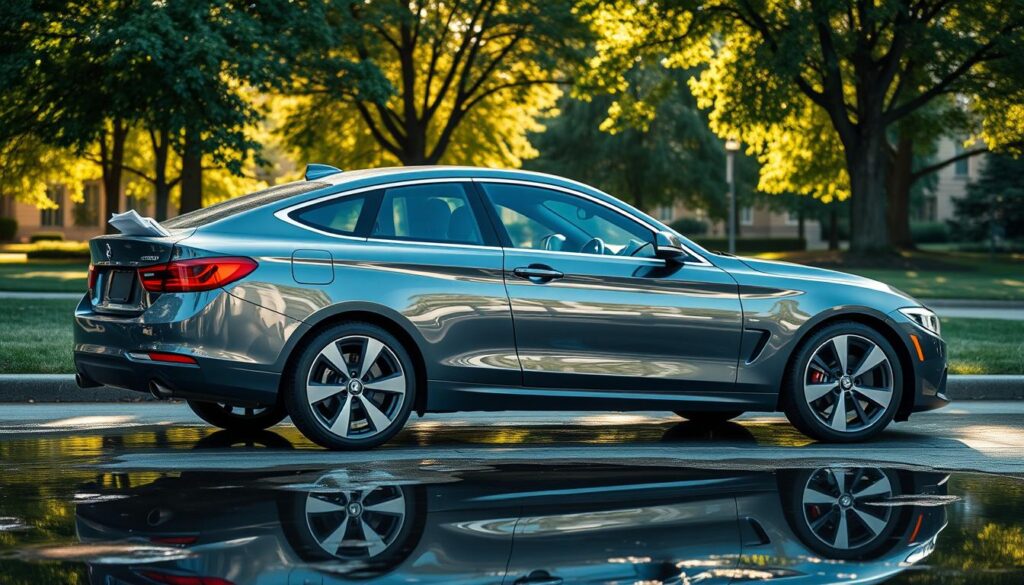
Surprising fact: 18-year-olds listed on a parents policy can pay as much as $4,638 a year, while a 21-year-old on their own plan may see up to $6,312.
That gap shows how much a college life choice can change your car insurance bill. You likely want clear, fast ways to compare options from GEICO, State Farm, Progressive, Allstate, USAA and others.
This brief guide helps you scan student car insurance deals, spot real discounts like good-student or distant-student perks, and weigh basic limits such as 100/300/50 and $500 deductibles.
Quick wins: learn which carriers favor college drivers, how staying on a parents policy may lower rates, and when telematics or bundling can cut costs.
Table of Contents
- Why student car insurance costs more and how you can still save
- What “buyer’s guide” means for you right now
- Student auto insurance quotes online
- Coverage you actually need as a college student
- Staying on your parents’ policy vs. buying your own
- Top companies college students consider today
- Discounts you shouldn’t miss as a college student
- Texas spotlight: Minimums, staying on parents’ policy, and rates
- How your driving record and vehicle choice impact your quote
- Telematics and pay-per-mile programs for campus drivers
- Setting smart liability limits as a student on a budget
- How to gather documents and get accurate online quotes fast
- Ways to lower your student car insurance rates this school year
- When you’re better off pausing or adjusting coverage
- Common mistakes students make when shopping online
- Compare quotes now and lock in the right coverage for your college life
Why student car insurance costs more and how you can still save
During college years, premiums climb because carriers weigh age and driving history heavily. Younger drivers under 25 face higher annual bills due to limited experience and higher claim frequency.
What drives higher rates: age, garaging address, and whether you stay on a parents policy or buy your own. For example, the average cost can be about $3,210 on a GEICO family plan but rise to $6,312 on a State Farm individual policy.
Ways to cut costs:
- Good-student discounts for B averages or honor roll status.
- Distant-student savings if you leave your car at home.
- Driver education and safe-driver programs that lower premiums for young drivers.
- Comparing car insurance companies to find the right mix of price and coverage.
Pay attention to bodily injury and liability per limits and pick deductibles that match your budget. With targeted discounts and smart policy choices, you can reduce insurance rates while keeping the protection you need.

What “buyer’s guide” means for you right now
Think of this buyer’s guide as a checklist that turns insurance jargon into clear, usable steps. You’ll focus on three goals: affordability, adequate protection, and a claims process that works when you need it most.
Your goals:
Your goals: affordability, adequate protection, and easy claims
Pick a monthly price you can handle and a policy that protects people per person and per accident. Use 100/300/50 with UM/UIM and $500 deductibles as a baseline for fair comparisons.
Present-day factors:
Present-day factors affecting rates in the United States
Repair costs, medical inflation, and claim frequency all push rates up. Look for carriers that offer good telematics and student discounts to lower premiums without losing key coverage.

Quick checklist to use now:
| What to check | Why it matters | Typical carrier perks | Action |
|---|---|---|---|
| Liability limits | Sets payout for bodily injury liability | 100/300/50 baseline | Match limits to assets |
| Discounts | Lowers your premium | Good-student, telematics, pay-per-mile | Ask each insurance company |
| Claims handling | Speed matters after a crash | In-app ID, fast digital claims | Test carrier apps |
For a quick comparison of best low-cost options, see best low-cost options.
Student auto insurance quotes online
Smart comparison starts with accurate input: license, VIN, garaging address, and student status.
How online tools work: You enter basic data and carriers return estimates in minutes. Top names like GEICO, State Farm, Progressive, Auto-Owners, Allstate (Milewise), and American Family use the same core fields.
How online quote tools work and what affects your price
Age, driving record, vehicle model, and location move the most needle on rates. Discounts for good grades, distant-student status, driver education, and telematics can cut your final number.
Steps to compare multiple insurers side by side
Use the same coverage limits and deductible for each run. Save scenarios, capture documents (license, VIN, grade proof), and check carrier service ratings before you bind a policy.

| Carrier | Key saving programs | Best for |
|---|---|---|
| GEICO | Good-student, safe-driver | Low base rates |
| State Farm | Good-student, teen programs | Local agent support |
| Allstate (Milewise) | Pay-per-mile telematics | Low-mileage campus drivers |
| Progressive | Snapshot telematics, discounts | Flexible add-ons |
Coverage you actually need as a college student
Decide which protections you truly need based on where you park, who you drive, and how far you go. Start with a simple baseline and tweak limits to match real campus risks.
Bodily injury limits: per person vs. per accident
Liability per person is what the policy pays for each injured person. A common buyer baseline is $100,000 bodily injury liability per person.
Liability per accident caps total payout for a crash. The usual companion number is $300,000 per accident. This combo protects you if multiple people are hurt.
Property damage risks on campus
Property damage liability pays for other vehicles and campus property. Tight lots, construction zones, and hit-and-runs make $50,000 a sensible starting point.
Collision vs. comprehensive
Collision coverage pays to fix your car after a crash. Comprehensive coverage covers theft, vandalism, storms, and animals.
"If you leave the car at home for a term, consider pausing collision while keeping comprehensive active."
Some carriers, like Progressive, offer this flexibility so you protect against theft and weather without paying full collision premiums.
Uninsured/underinsured motorist and deductibles
UM/UIM should mirror your injury liability limits so you have similar protection when the other driver lacks enough coverage.
Choose a deductible that fits your budget. A $500 deductible is common, but raising it lowers rates if you can cover the out‑of‑pocket cost.
- Raise limits if you carpool or drive roommates often.
- Keep comprehensive if the car stays on campus to cover theft and storms.
- Use the 100/300/50 baseline and adjust based on vehicle value and risk tolerance.
For help finding low cost options that match this mix, check low premium options. This keeps your policy practical, protects your wallet, and fits campus life.
Staying on your parents’ policy vs. buying your own
A simple change in ownership or garaging address can shift your premiums more than you expect.
Average cost comparisons usually favor staying on a family plan. For liability‑only examples, a family policy may run about $296/month while a teen alone might average $184/month. Full coverage averages can be roughly $599/month for family versus $372/month for a solo plan. Actual numbers vary by carrier and driving record.
Ownership and title matter. If the car is titled in your parents' name and it stays at the family address, many carriers allow you to stay listed. If you own the vehicle or move it to campus, some insurers require a separate policy.
Out‑of‑state and garaging rules can force a new policy. Keeping the student car at school most of the year or registering it in a different state often triggers local requirements.
"Weigh multi‑vehicle savings and bundled discounts against the protection and flexibility of your own policy."
- Consider named non‑owner coverage if you drive but don't keep a car at school.
- Split policies only if it protects family rates after a claim.
Top companies college students consider today
Picking the right carrier means matching real campus habits with each brand’s strengths. Below are concise notes to help you finish a practical shortlist fast.
GEICO
Strengths: affordability, app tools, and up to 15% good student discounts. GEICO suits low‑cost seekers who want strong digital service.
State Farm
Strengths: the largest good student savings (up to 25%) and programs like Steer Clear and Drive Safe & Save. State Farm often leads on teen-friendly perks.
Progressive
Strengths: flexible add‑ons and the option to pause collision if you leave the car at home. Distant and good student discounts reach about 10%.
Auto‑Owners
Strengths: low averages for young drivers who buy their own policy and up to 20% good student discounts. Best if you’re going solo and want agent support.
Milewise by Allstate
Strengths: pay‑per‑mile pricing with a daily base and per‑mile fee that counts the first 250 miles per day. Ideal if you drive very little.
American Family
Strengths: options for higher‑risk drivers, volunteer discounts, and programs that help after violations or minor accidents.
USAA
Strengths: best for military families and ROTC members. Strong pricing, SafePilot discounts, and high satisfaction if you qualify.
"Shortlist two or three companies to quote first, matching each to your mileage, garaging address, and discount opportunities."
- Match your habits to the brand’s sweet spot: GEICO for price, State Farm for top student discounts, Progressive for flexible coverage.
- Check app features, digital ID, and claims support these matter during a busy semester.
- Compare real quotes using your garaging address; averages are directional and your rates will vary.
For a quick round of low‑cost options, start with this best low-cost options guide to see how these companies stack up for your profile.
Discounts you shouldn’t miss as a college student
A few simple proofs a transcript or service log can unlock sizable savings. Know what each carrier asks for and keep documents ready each semester.
Good grades, distance, and driver education
Good‑grade discounts often range from 5% to 25%. Insurers may accept a B average, a 3.0 GPA, honor roll status, or top‑rank proof.
Distant‑school savings apply if you study 100+ miles from home and leave your car at home. That can cut rates while you’re away.
Driver education courses and defensive driving classes lower premiums and improve skills.
Volunteer, military, and group perks
Some carriers reward community service hours or membership in approved groups. Military and ROTC ties also bring added discounts.
| Discount | Eligibility | Typical savings |
|---|---|---|
| Good‑grade | GPA or honor roll proof | 5–25% |
| Distant‑student | School 100+ miles, car kept home | Varies; often 5–15% |
| Driver ed | Approved defensive driving course | 5–10% |
Pro tip: stack general discounts pay in full, paperless billing, multi‑car, and anti‑theft—to shrink your premium without losing needed coverage. Recheck your policy mid‑term and resubmit proofs so your savings stay active.
Texas spotlight: Minimums, staying on parents’ policy, and rates
Texas rules shape what coverage you must carry and what savings you can keep while at school. The state requires minimum liability that covers bodily injury and property damage. You should confirm that your policy meets the legal floor before you drive near campus.
Meeting Texas liability requirements if you drive
Texas minimums set a baseline for liability per person and per accident payouts. Decide if higher limits make sense for real risks like campus parking lots or heavy traffic.
Out-of-state students attending school in Texas
If your car stays primarily in Texas, some carriers require a local policy. Many can remain on a parents policy if your permanent address stays home, but check garaging rules to avoid coverage gaps.
International students and licensing options
International drivers must hold a valid license; an International Driving Permit helps for 6–12 months where allowed. Notify your carrier so your policy and ID cards match your Texas address.
- Average cost: liability-only monthly rates tend to fall from about $205 at 18 to $176 at 21.
- Compare State Farm, Travelers, and USAA for competitive student pricing and discounts.
- Re-quote if you move off campus or change cars to capture lower rates.
For more ways to find low-cost coverage that fits Texas rules, see low premium options.
How your driving record and vehicle choice impact your quote
How you drive and what you drive determine whether your next renewal is a bargain or a shock. A clean driving record keeps rates low. Tickets, at‑fault accidents, and DUIs raise your policy quickly.
Vehicle choice matters too. High repair costs, poor safety ratings, or high theft risk push up car insurance prices. Economy cars with good safety scores generally show lower average cost.
"Fix simple habits first: avoid night speeding, park in secure areas, and cut unnecessary miles to protect your rate."
Practical steps:
- Keep a clean driving record; violations often stay on file and inflate rates.
- Add anti‑theft and safety devices to reduce risk and premiums.
- Use defensive driving or telematics programs to rebuild savings after a lapse.
| Factor | Effect on rates | What to do |
|---|---|---|
| Driving record | Major impact; tickets and DUIs increase premiums | Drive safely; re‑quote after 6–12 months |
| Vehicle type | Higher repair/theft risk raises cost | Choose economy or high‑safety models |
| Coverage limits | Higher bodily injury liability and property damage raise premiums | Balance limits to protect assets without overspending |
Telematics and pay-per-mile programs for campus drivers
Modern tracking programs turn your daily drives into data that can cut your semester costs. These systems track braking, speed, phone use and mileage to personalize discounts during the school year.
Safe driving apps, mileage caps, and when they pay off
Pay-per-mile plans like Allstate’s Milewise pair a daily base with a per-mile fee and only count the first 250 miles per day in many states. That makes them smart if you mostly walk, bike, or use campus shuttles and rarely drive.
Programs such as State Farm’s Drive Safe & Save and USAA SafePilot can cut premiums up to about 30% for safe habits. Progressive’s Snapshot can lower costs too, but risky behavior may raise your rates.
| Program | Provider | Tracks | Best if | Notes |
|---|---|---|---|---|
| Milewise | Allstate | Mileage (daily cap), basic driving | Very low-mile drivers | Daily base + per-mile fee; good on campus |
| Drive Safe & Save | State Farm | Speed, braking, mileage | Safe young drivers | Discounts up to ~30%; app-based |
| SafePilot | USAA | Phone use, braking, speed | Military families with safe habits | Large discounts if qualified |
| Snapshot | Progressive | Acceleration, braking, mileage | Drivers who improve habits | Can increase price for risky driving |
Pair telematics with comprehensive coverage if you store your car on campus and want theft or weather protection. Estimate monthly miles before enrolling so you can project savings and pick between pay-per-mile and traditional discounts.
Check device needs, privacy settings, and trial periods. Your driving record still matters—telemetry may help rebuild savings but can affect renewal if it shows risky behavior. Try a program for a term, document miles during breaks, and opt out before renewal if the data isn’t in your favor.
cheap auto insurance for new drivers has more tips on pairing telematics with the right policy and choosing the best car insurance approach for college life.
Setting smart liability limits as a student on a budget
Choose baseline coverages that keep you protected and make rate comparisons simple.
Common buyer’s guide baseline: a starting package of 100/300/50 plus UM/UIM at 100/300 and $500 deductibles on collision and comprehensive helps you compare offers apples to apples.
How these limits work for you
Bodily injury liability of $100,000 per person covers one injured party. The $300,000 per accident cap protects against multiple injuries in a single crash.
Property damage liability of $50,000 handles repair bills for vehicles and campus property. Set this level to match likely repair costs in dense parking areas.
- Match injury liability per and liability per person to how often you carry passengers.
- Boost UM/UIM if many local drivers carry only minimum limits.
- Pick deductibles that your emergency fund can cover so a claim won’t derail tuition or rent.
| Coverage | Buyer baseline | When to raise | Effect on rates |
|---|---|---|---|
| Bodily injury (per person) | $100,000 | Frequent passengers, carpooling | Moderate increase |
| Bodily injury (per accident) | $300,000 | Road trips with friends, highway commute | Protects against big claims |
| Property damage liability | $50,000 | High repair-cost areas | Small to moderate increase |
Revisit limits yearly as your car value or income changes. Small, strategic adjustments can improve protection without a big jump in car insurance rates or your monthly policy cost.
How to gather documents and get accurate online quotes fast
Start by collecting a few key documents so you get accurate offers the first time. Good prep prevents requotes and speeds up binding.
What to have ready: license, VIN, garaging address, grades
Pack these items:
- Your driver’s license and VIN so providers can match your vehicle.
- The current garaging address (on or off campus) and an honest annual mileage estimate.
- Proof of grades to claim good‑performance savings immediately.
- Notes on whether this is a parents car and if you plan to stay parents on the family plan or buy your own policy.
Also confirm recent tickets or accidents up front. Include your desired limits, such as bodily injury amounts, so each carrier quotes the same coverage and you can compare rates fairly.
| Document | Why it matters | How to supply |
|---|---|---|
| Driver’s license | Verifies identity and driving history | Upload photo or number in the app |
| VIN & garaging address | Determines vehicle risk and local rates | Enter exactly as on registration |
| Grade proof | Activates good‑grade discounts | Upload transcript or report card |
| Payment & contact | Lets you bind coverage immediately | Verify email, phone, and card |
When you’re ready, compare car insurance offers and use the insurer app to upload documents. For another carrier option, see The General car insurance to review policy features before you bind.
Ways to lower your student car insurance rates this school year
Simple billing and bundling choices can cut your yearly premium without changing your coverage. Start with easy wins that many carriers reward immediately.
Practical moves that add up
Bundle renters with your car to unlock a multi-policy discount that often beats standalone pricing for the school year. Ask your agent to stack family multi-car pricing if you share a plan.
Paying in full or enrolling in autopay trims installment fees. Switch to paperless billing for a small discount and cleaner records.
- Add anti-theft or safety devices and report them so credits appear on your next bill.
- Try telematics if your mileage is low—behavior-based programs can cut rates for careful driving on campus.
- Re-quote when your address, mileage, or GPA changes so you capture new student discounts and savings.
| Action | Typical savings | When to use |
|---|---|---|
| Bundle renters + car | 5–15% | Living off campus or renting an apartment |
| Pay in full / autopay | 1–7% | If you can cover the premium upfront |
| Paperless & safety devices | 2–8% | Want quick, low-effort discounts |
| Telematics / low miles | Up to 30% (varies) | If you drive rarely and safely |
When you’re better off pausing or adjusting coverage
If your car will sit idle for a semester, you can often cut costs by trimming protections that only matter while you drive.
Consider keeping comprehensive coverage to protect against theft, vandalism, and weather while pausing collision coverage. Progressive and some other carriers let you pause collision if the vehicle stays at home, but availability varies by state.
Practical steps before you change a policy
Confirm with your insurer how to pause and later restore collision coverage. Keep liability active if anyone might drive the vehicle or if local rules require it for street parking.
- Coordinate with your parents when this is a parents car so the family policy remains compliant.
- Maintain continuous coverage to avoid gaps that can raise future rates.
- Document changes, note mileage drops, and store the car safely to lower risk.
- Set a calendar reminder to restore full protections before you drive again.
- Compare savings from pausing collision to potential out-of-pocket costs for surprises.
| Option | What it protects | When to use |
|---|---|---|
| Comprehensive-only | Theft, vandalism, weather | Car stored, not driven for months |
| Liability + comprehensive | Other people’s injury and non-collision loss | Car parked but may be moved or driven occasionally |
| Full coverage | Collision and comprehensive | Active driving; highest protection |
Before you change anything, read your policy and call your agent. For a quick primer on pausing coverage, see this suspend coverage guide. If you want options for keeping solid protection while lowering cost, review affordable full coverage.
Common mistakes students make when shopping online
A cheap monthly rate can hide big out-of-pocket costs after a crash. Many shoppers focus on the premium and skip key checks that protect your finances and credit.
Underinsuring liability and ignoring deductibles are the top errors. Defaulting to state minimums may leave you liable for medical bills or property damage. Start from a sensible baseline like 100/300/50 plus UM/UIM so you don’t get surprised.
Right-size your deductible to an amount you can actually pay. High deductibles lower monthly bills but can create a financial emergency if you file a claim mid-semester.
- Keep garaging address, mileage, and listed drivers accurate to avoid denials or cancellations.
- Compare at least three offers using identical limits and deductibles so the cheapest still meets your needs.
- Read the declarations page for excluded drivers, mileage assumptions, and vehicle lists.
- Verify discount documentation GPA proof or membership so savings remain at renewal.
- Check telematics terms before you enroll and confirm state availability or membership rules tied to a quote.
- Schedule annual reviews to adjust limits as your risk changes and prioritize claim service reputation, not just price.
Pro tip: A well-chosen policy with reliable claims handling saves more than chasing the lowest rate.
Compare quotes now and lock in the right coverage for your college life
Take your shortlist and run final comparisons so you can lock in the right coverage for campus life. Use the same limits (100/300/50, UM/UIM, $500 deductibles) across carriers like GEICO, State Farm, Progressive, Allstate’s Milewise, Auto‑Owners, American Family, and USAA to find the best car insurance for your budget.
Verify discounts, upload grade or distance proof, and add missing documents before you bind a policy. Save the final quote and ID cards to your phone so you are ready for parking checks or a traffic stop.
Set a renewal reminder, coordinate details with parents if you share a plan, and confirm claims channels app, phone, or agent. Choose the policy that balances price, protection, and convenience, then lock it in so you can focus on college life.
🚗 Explore More Auto Insurance Guides
View All Auto Articles → Affordable Teen Car Insurance: Save on Your Policy

Compare Full Auto Cover Policies for UK Drivers

Compare Complete Car Insurance Quotes for Your Vehicle

Young Driver Car Insurance: Coverage You Can Count On
Get Comprehensive Auto Insurance Online Quotes Today

Total Vehicle Insurance Coverage: What You Need to Know
Go up
Leave a Reply